








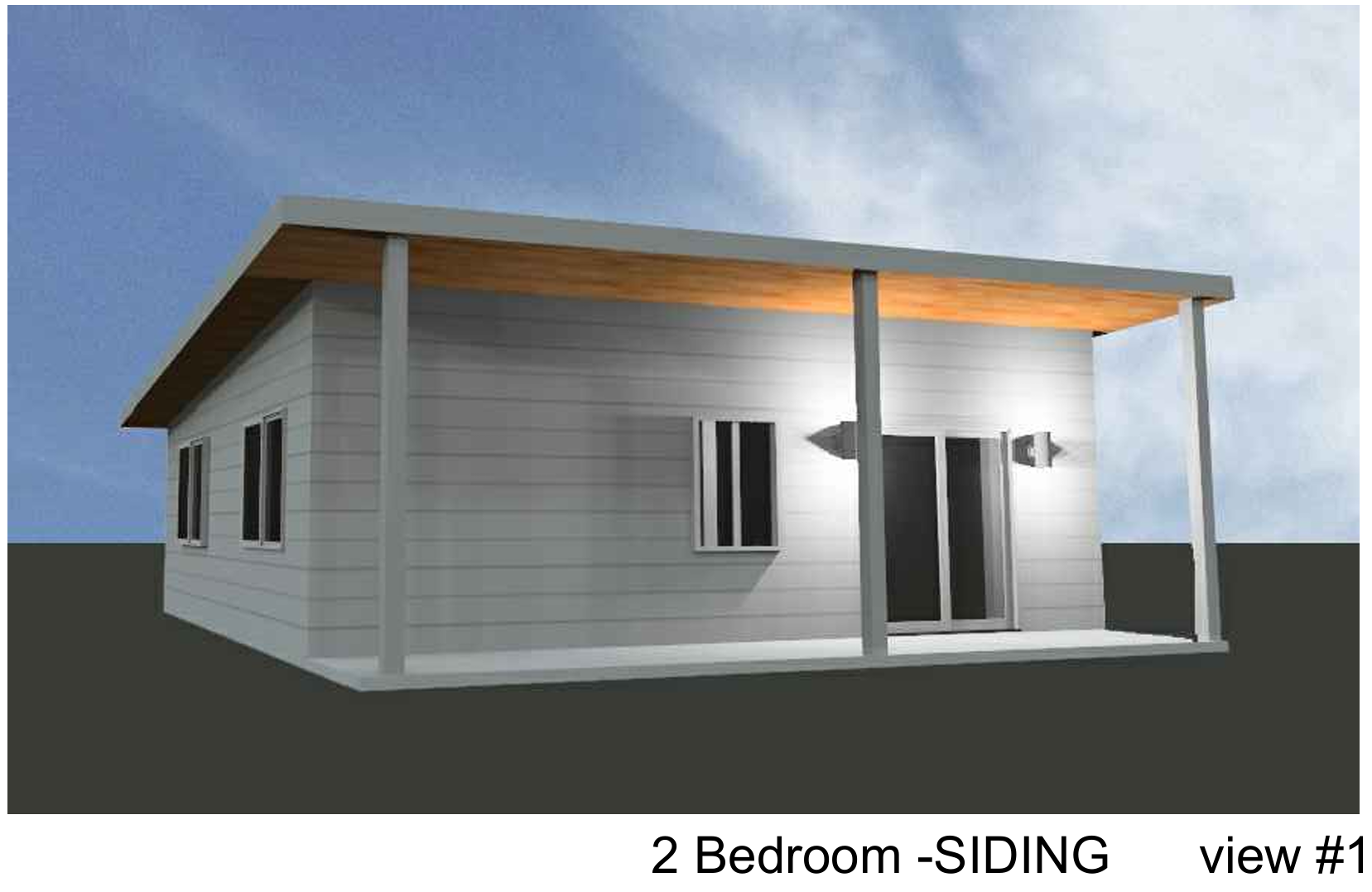
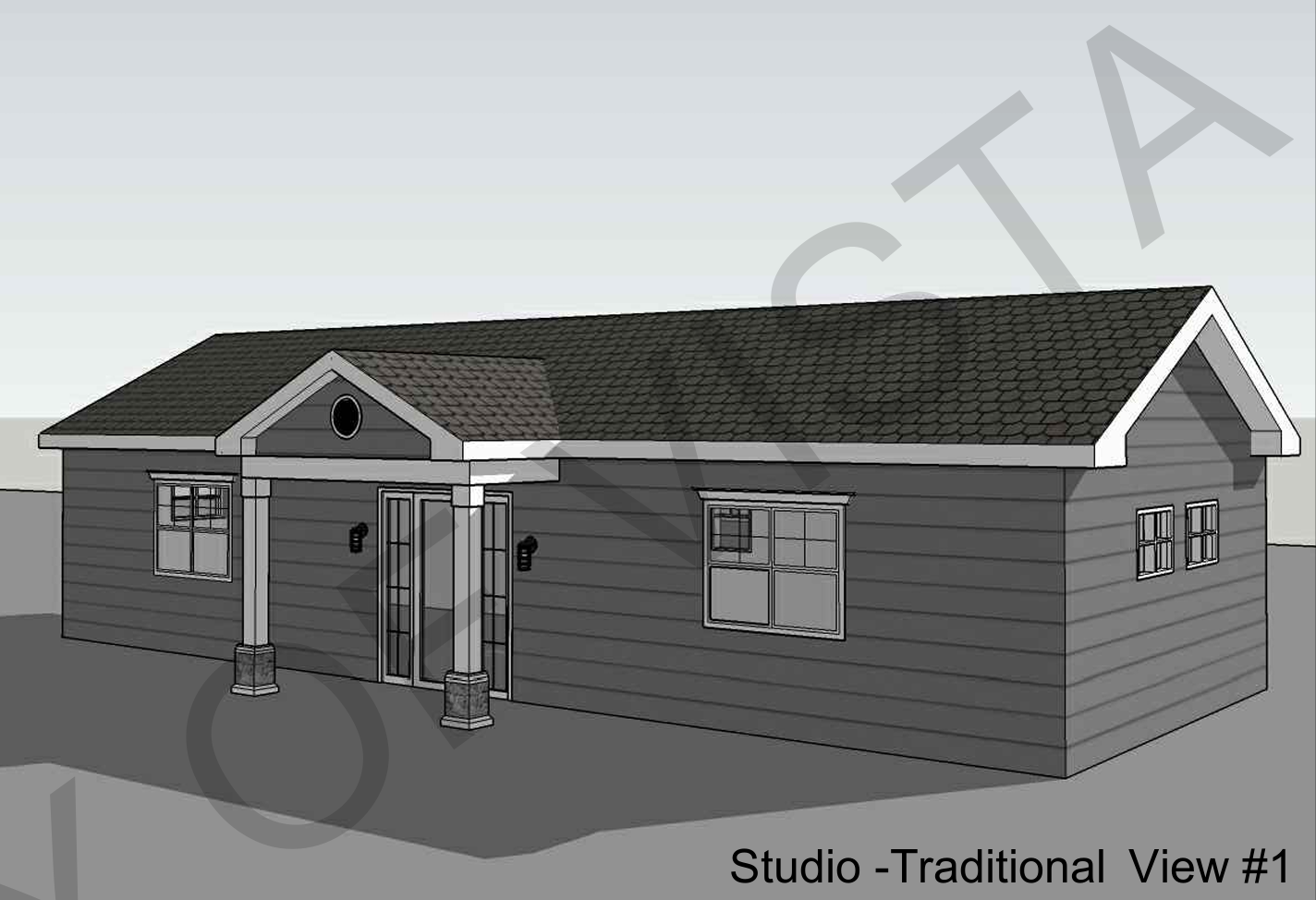
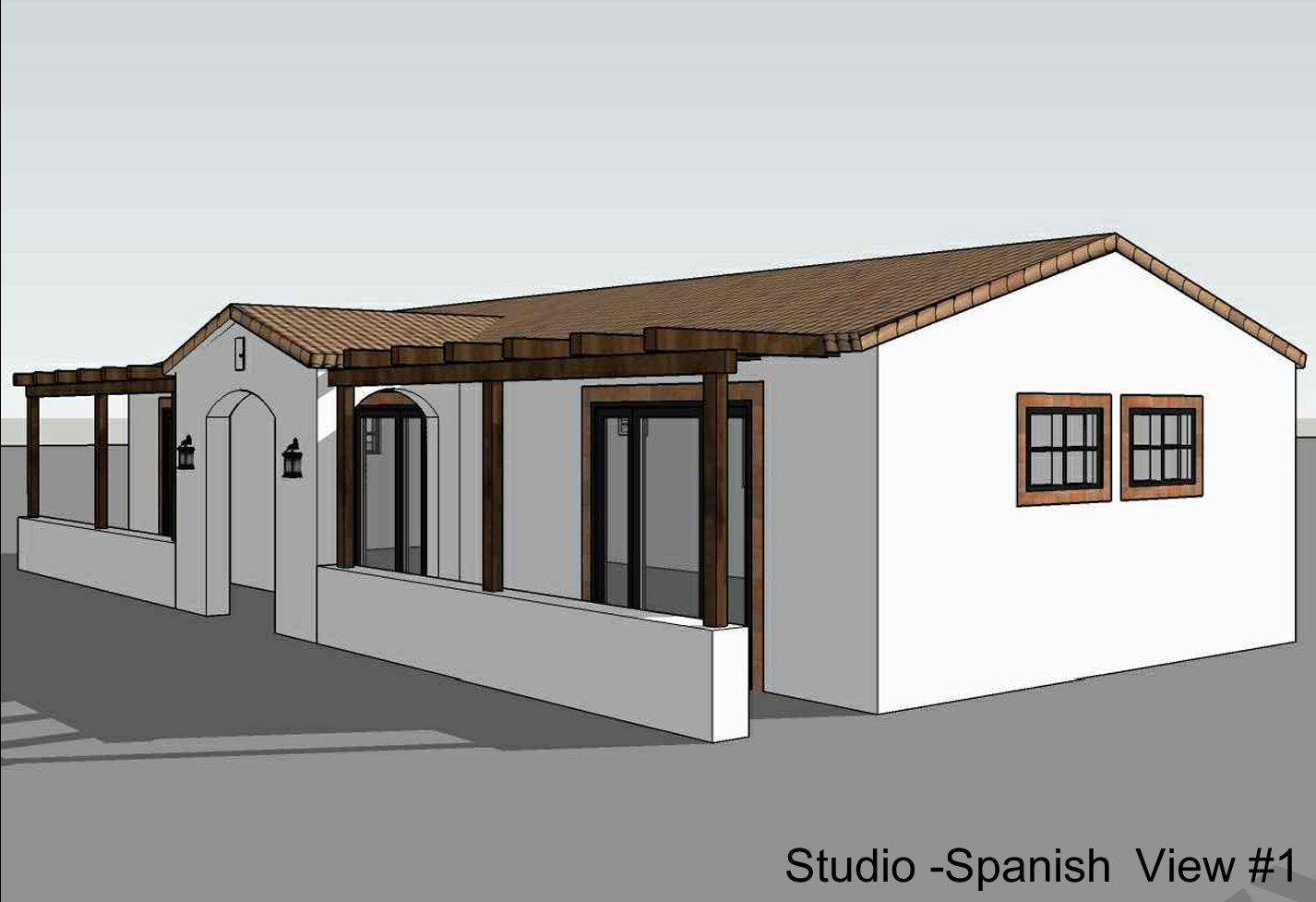
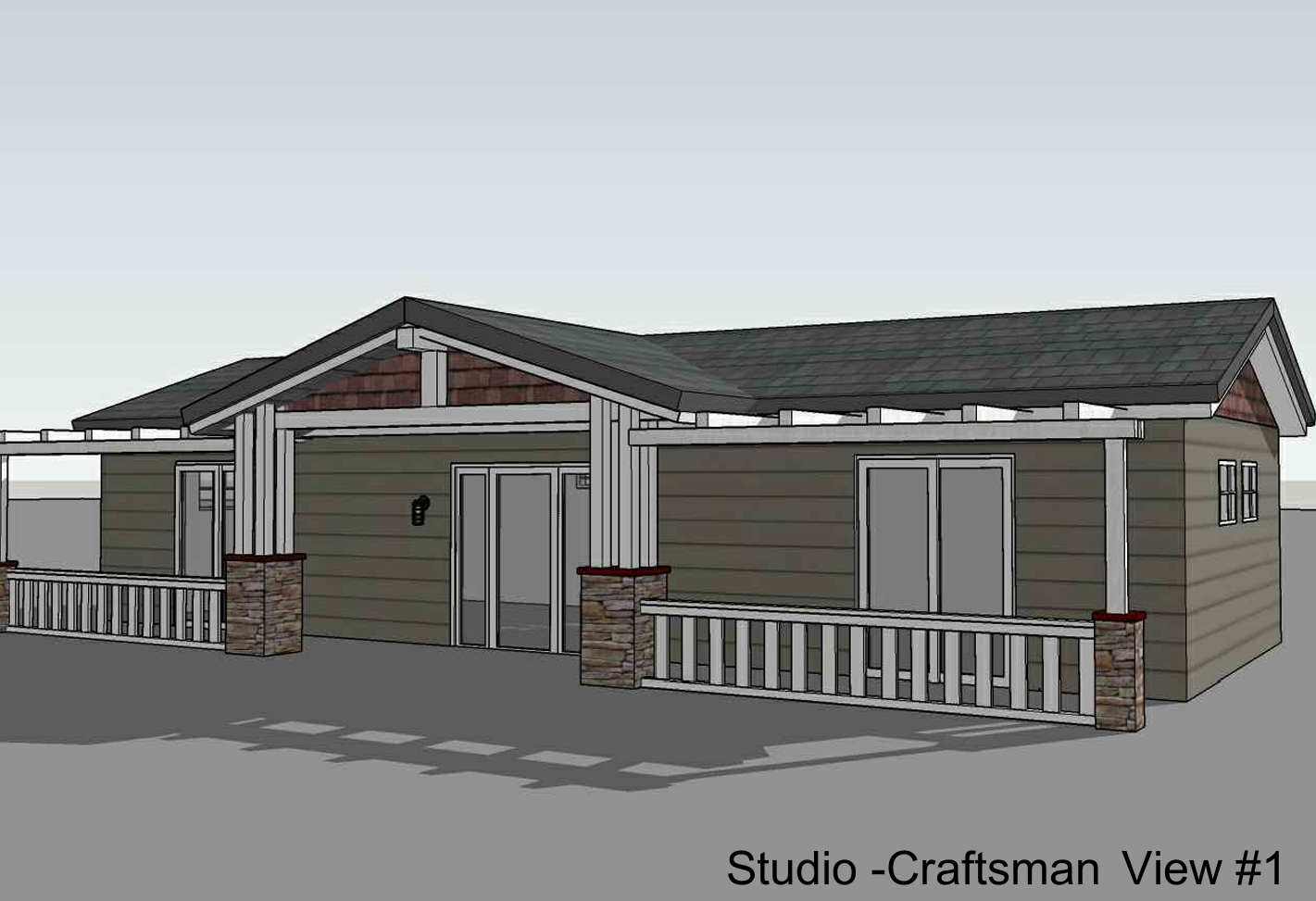



















.avif)

When One City's ADU Plans Become Everyone's
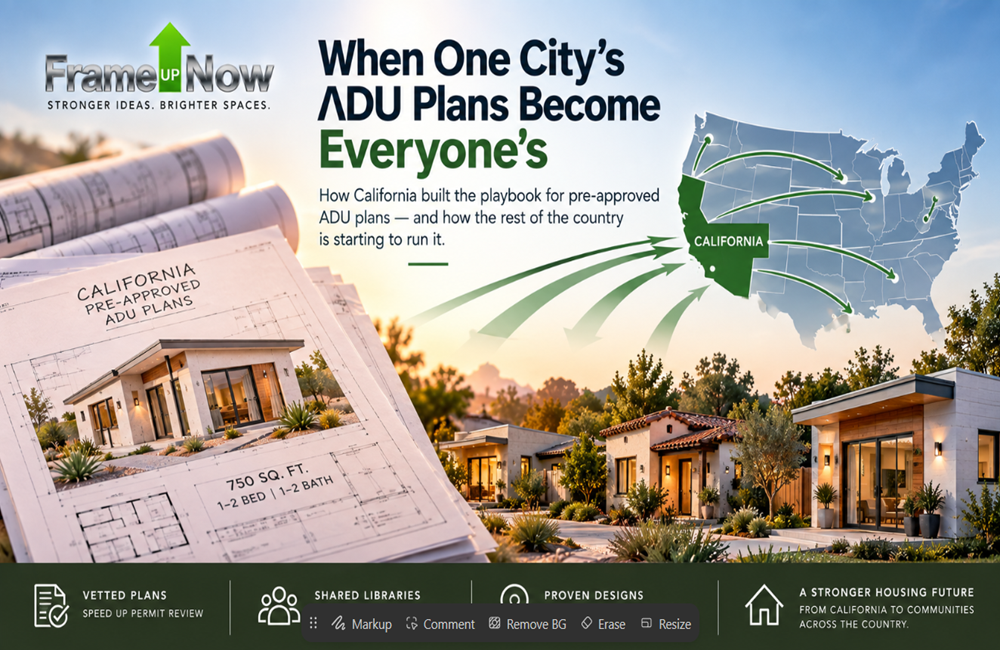
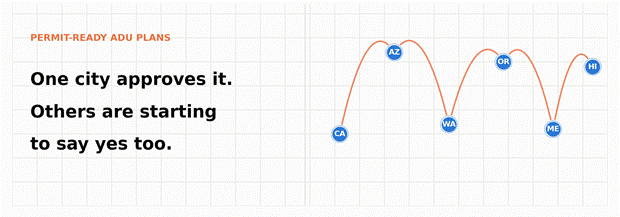
A pre-approved ADU plan is meant to travel: once one jurisdiction vets it, the infrastructure now exists for others to say yes to the same plan.
A few years ago, “permit-ready” ADU plans meant one thing: a city or county paid a design firm to draw a handful of accessory-dwelling-unit floor plans, ran them through its own building-plan review once, and let homeowners pick from that shelf instead of hiring an architect and waiting months for custom plan check. It was a local tool for a local backlog.
The question worth asking now is what happens at the seams between jurisdictions. If City A has already spent months and tens of thousands of dollars vetting a plan set for wind load, egress, and fire separation, does City B — which never built its own library — have any reason to make an applicant start from zero? Or does “permit-ready” reset to zero at every city line?
The answer, it turns out, is genuinely mixed, and increasingly the more interesting story is not any single instance of borrowing but the plumbing being built underneath the whole system — regional agencies, state catalogs, and shared databases designed from day one to let one approval travel to many cities. California is the clearest place to see it happen because state law forced the issue in 2023; but the underlying pattern is now showing up from Washington’s Puget Sound to Michigan’s industrial cities to a handful of statehouses that have never passed an ADU law before.
What “permit-ready” actually buys you
A pre-approved (or “permit-ready”) ADU plan is a complete building-plan set — floor plan, elevations, structural details, energy compliance — that a jurisdiction’s building department has already reviewed and stamped as code-compliant, before any specific homeowner applies. The applicant still submits a site-specific package (lot survey, setbacks, utility connections, sometimes a foundation design for local soil conditions), but the plan-check portion of the review — usually the slowest and most expensive part — is already done.
That distinction matters for what follows. “Permit-ready” has never meant “permit-free.” It means the building-code review happens once, centrally, instead of separately for every applicant. The question this piece is about is simply: once, centrally — for whom?
“Permit-ready” has never meant “permit-free.” It means the building-code review happens once, centrally, instead of separately for every applicant.
California wrote this into law. Here’s what it actually says.
California is the only state that has required every city and county to run a preapproval program, and it’s the best place to look for hard evidence because the mechanism is written into the statute itself, not left to informal custom.
Assembly Bill 1332 (2023) added Government Code §65852.27, requiring local agencies to establish an ADU preapproval program by January 1, 2025. Buried in subsection (a)(5) is the detail that matters for this question: a jurisdiction’s program can be built from plans it developed itself, plans submitted by outside designers, or plans that have already been preapproved by other agencies within the state. The legislature didn’t just tolerate cross-jurisdiction reuse — it wrote it in as one of three explicit compliance paths, largely so that smaller cities and counties wouldn’t need to fund a design program from scratch just to meet the mandate.
That statutory option turns out to be more than a hypothetical. A few concrete things have happened because of it:
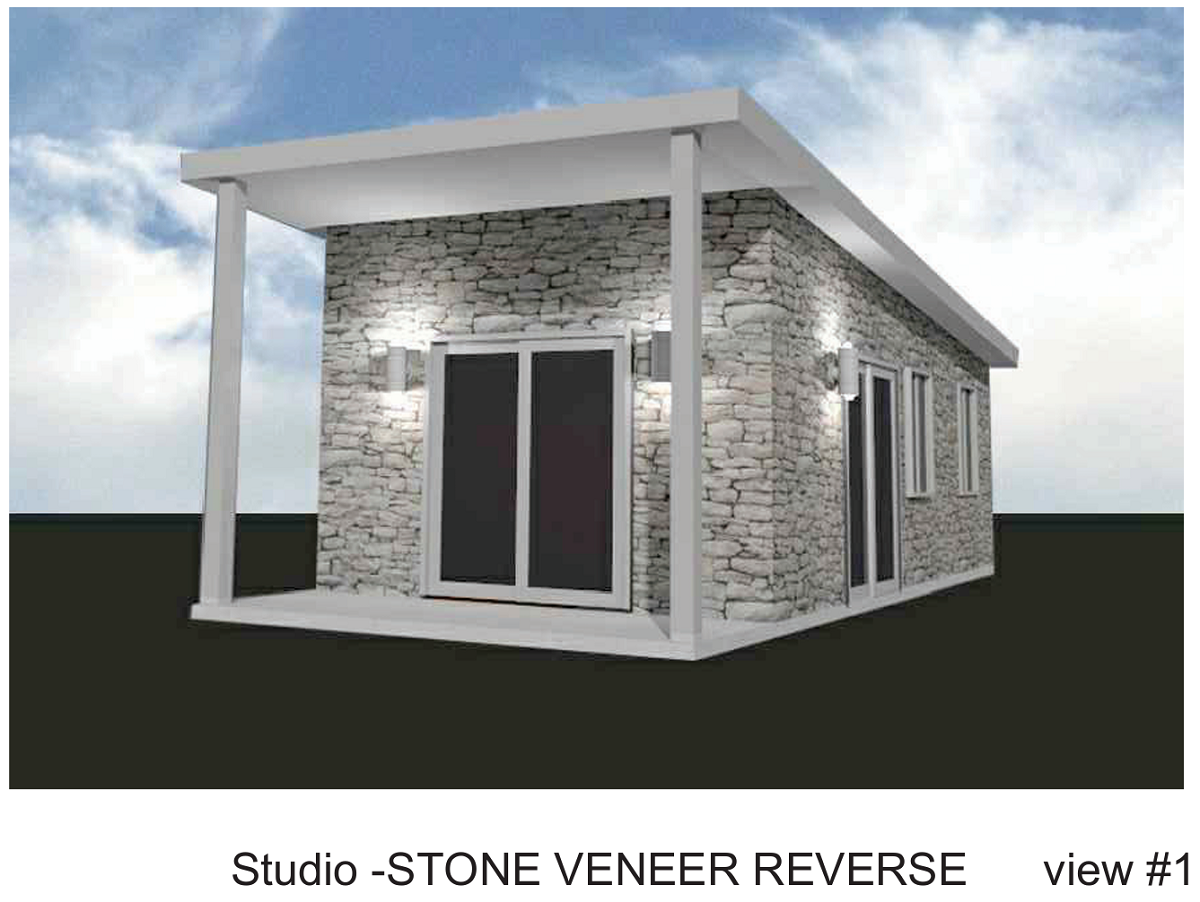
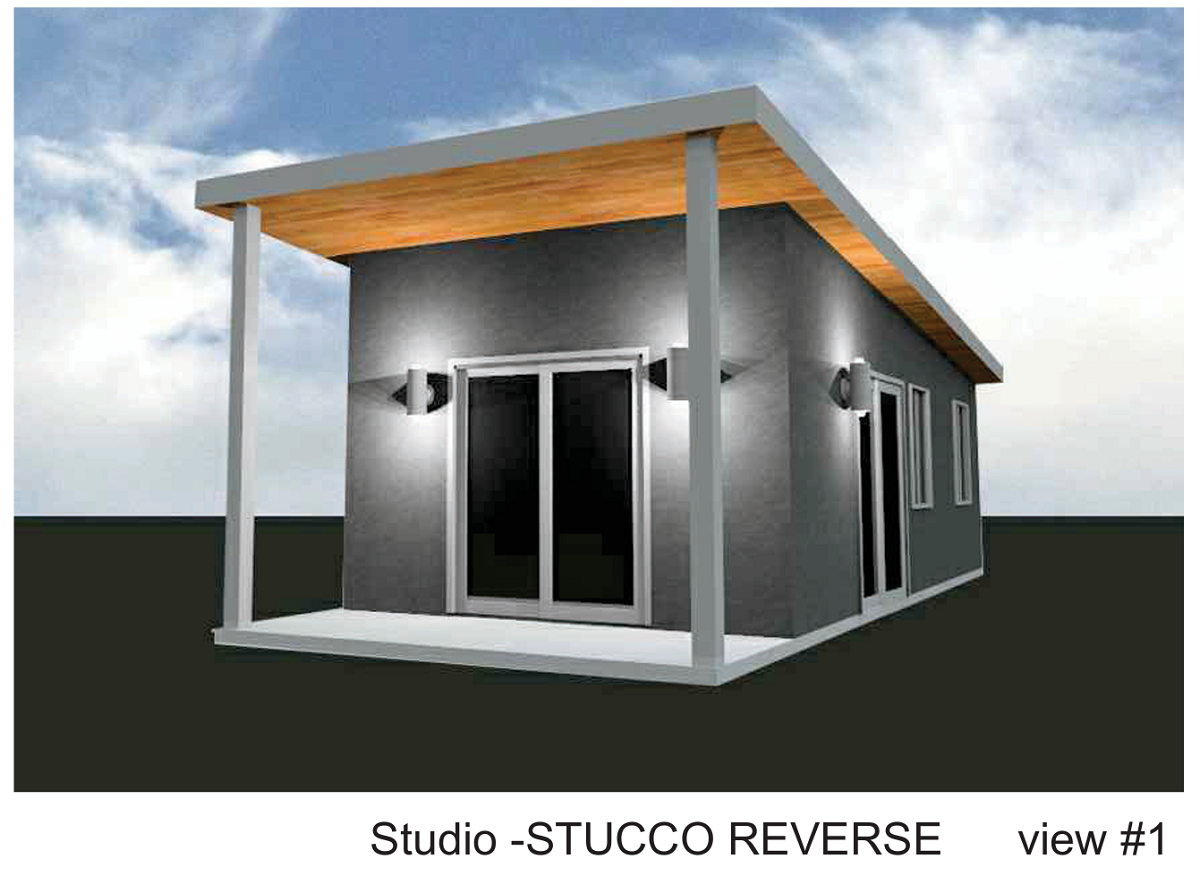
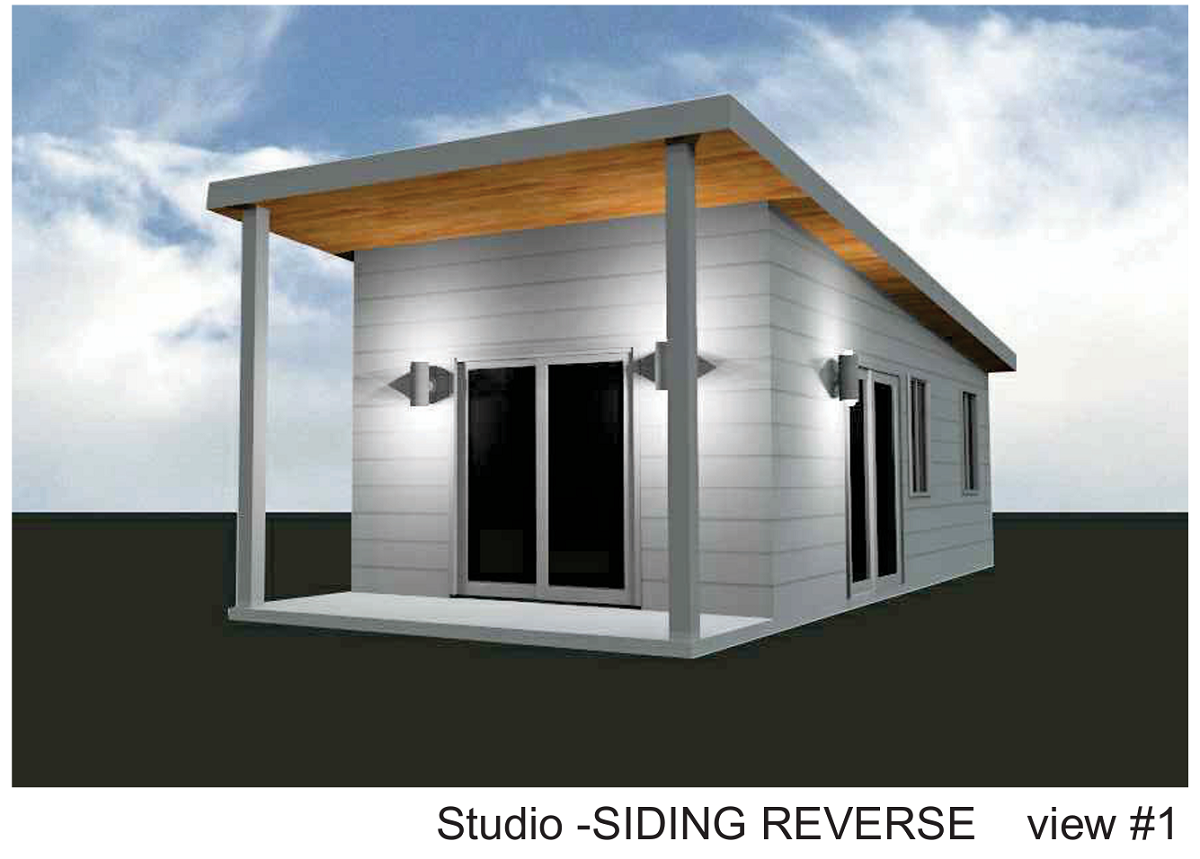
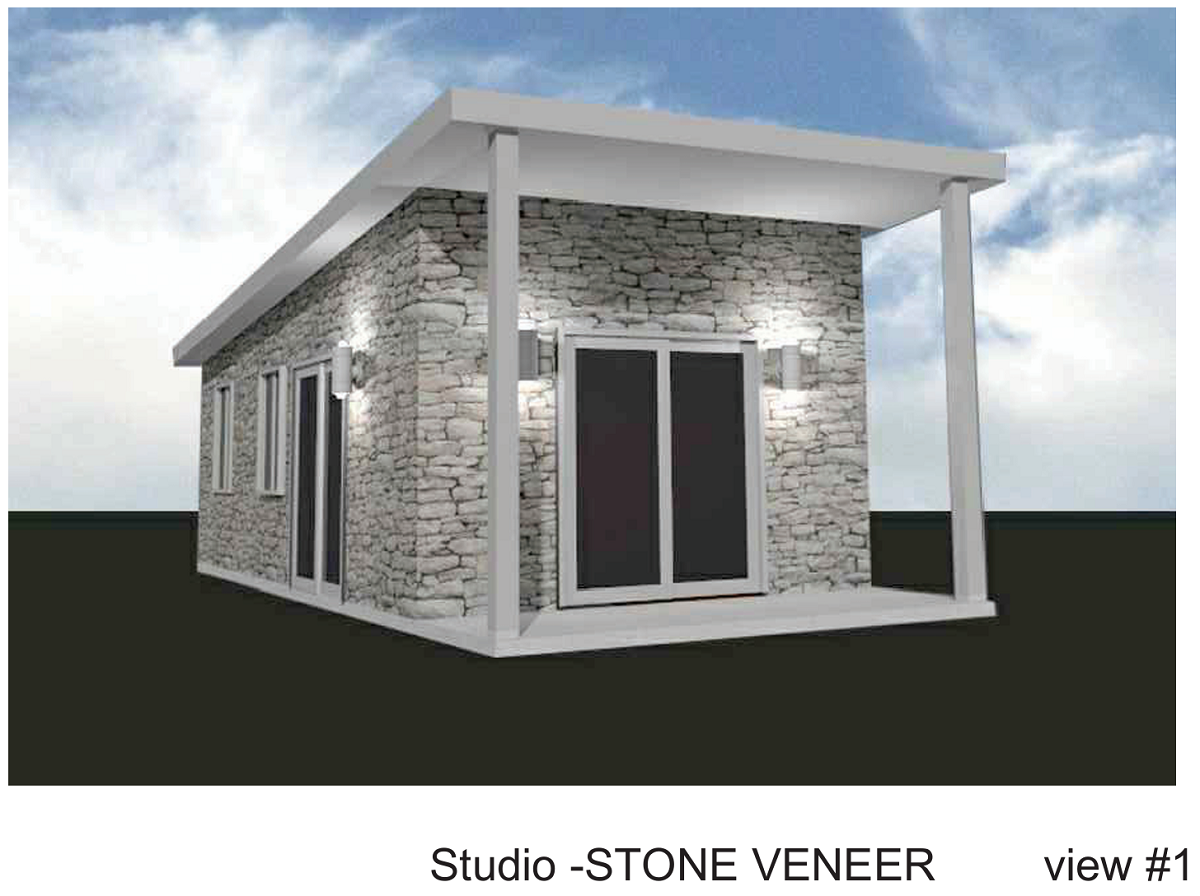
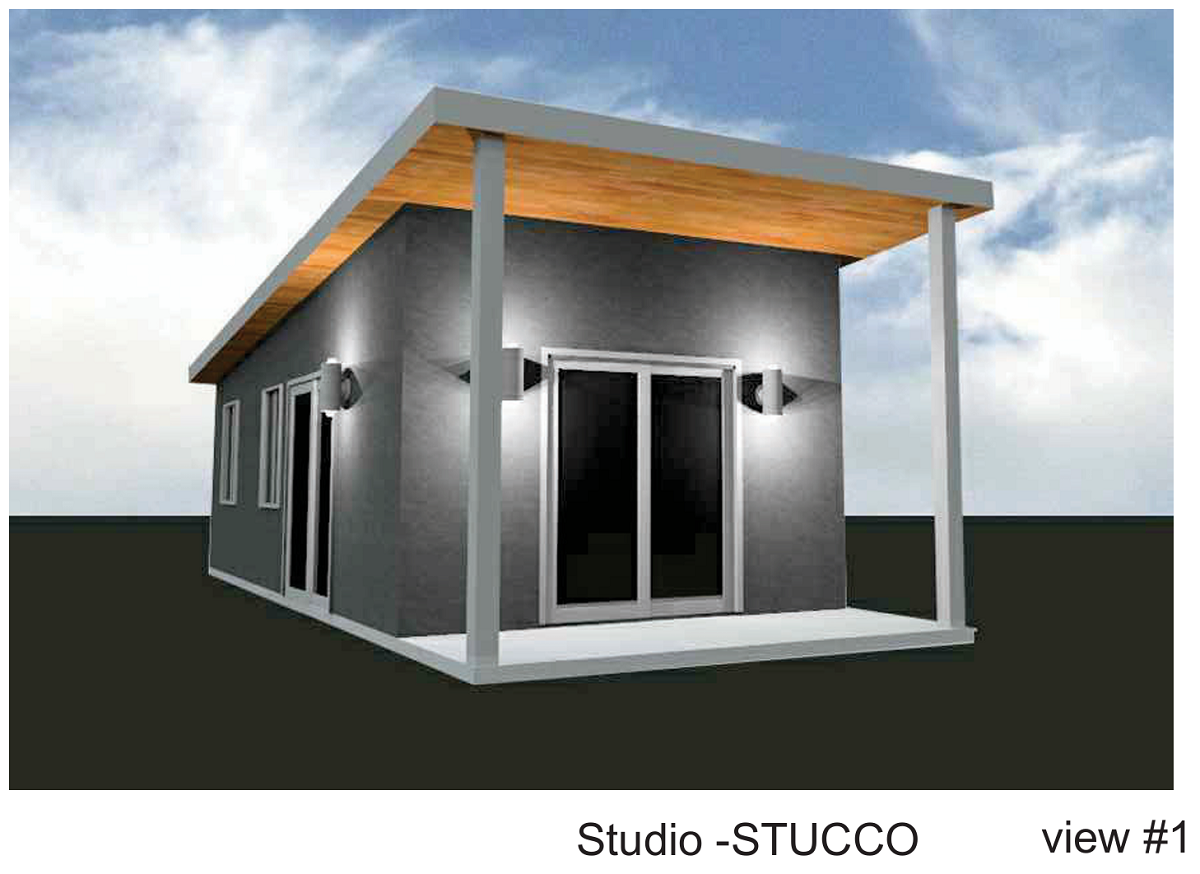
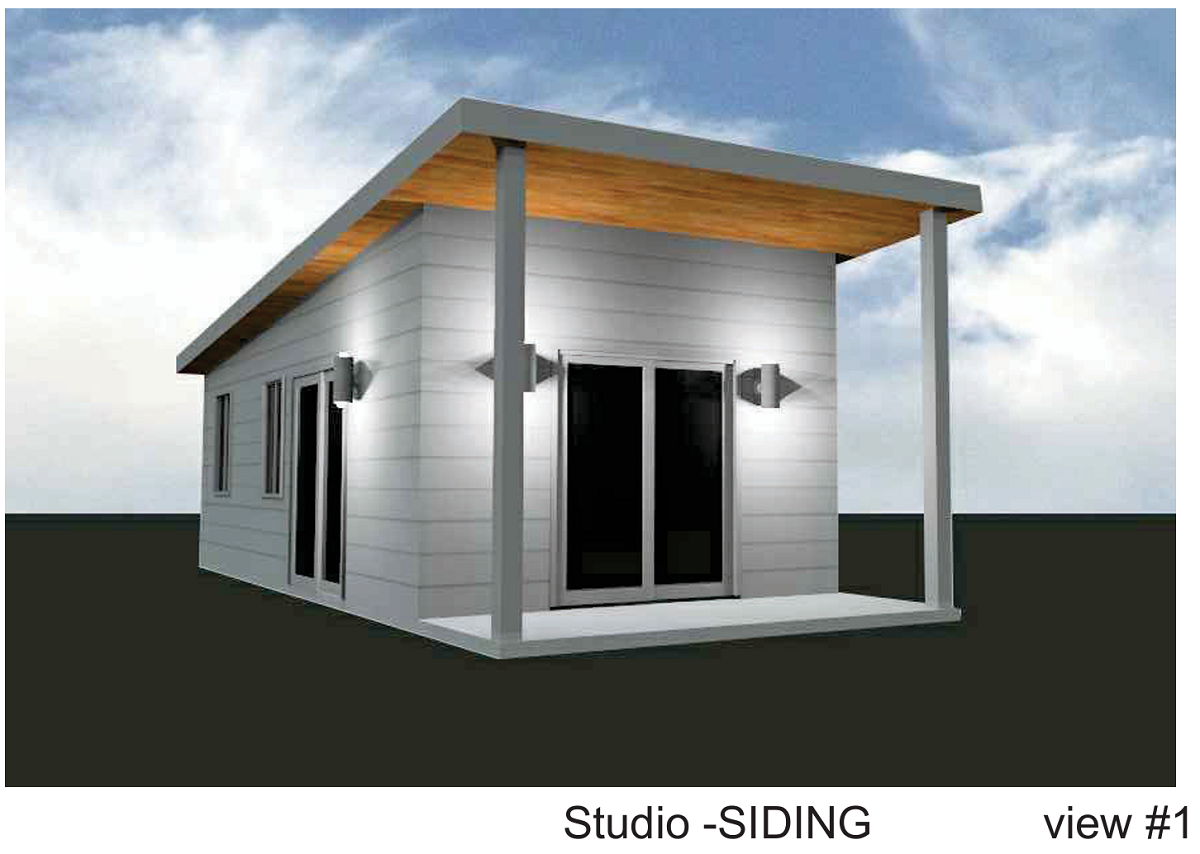
A city adopting a specific plan approved by another city’s building department. Burbank’s Pre-Approved ADU Program lists a section titled “LADBS Preapproved ADU Information,” crediting a design (the “IT House ADU,” a 360-square-foot studio) with the note that the Los Angeles Department of Building and Safety “has this listed as Approved.” Burbank’s own page states plainly that the design is “accepted by the City of Burbank” — a smaller city importing a plan a much larger neighbor’s building department had already vetted, rather than re-running the review.
Regional agencies building one plan set for many member cities. Rather than one city borrowing from another after the fact, several California councils of governments designed shared libraries so multiple jurisdictions honor the same plans by construction: the San Bernardino County Transportation Authority/Council of Governments developed designs explicitly “to expedite the ADU permit process for SBCTA/SBCOG jurisdictions,” and the Orange County and Ventura councils of governments built comparable shared plan sets for their member cities.
A statewide plan gallery meant to be reused jurisdiction by jurisdiction. The nonprofit Community Planning Collaborative built an “ADU Plans Gallery” — roughly 80 vetted designs — that individual cities and counties license and host as their own branded gallery. More than 40 California jurisdictions, including Mariposa County, have launched or are launching a customized version of it, each one choosing which plans to feature, including plans other jurisdictions already vetted.
Certification that supersedes local plan review entirely. Factory-built (“modular”) ADUs certified by the California Department of Housing and Community Development or HUD are treated as pre-approved statewide by design — the plan review happens once, at the state or federal level, and every local building department in California is required to honor it. This is the cleanest version of “one approval, everywhere”: no local government re-reviews the structural plans at all, only the site work.
Six ways one jurisdiction’s approval ends up honored elsewhere
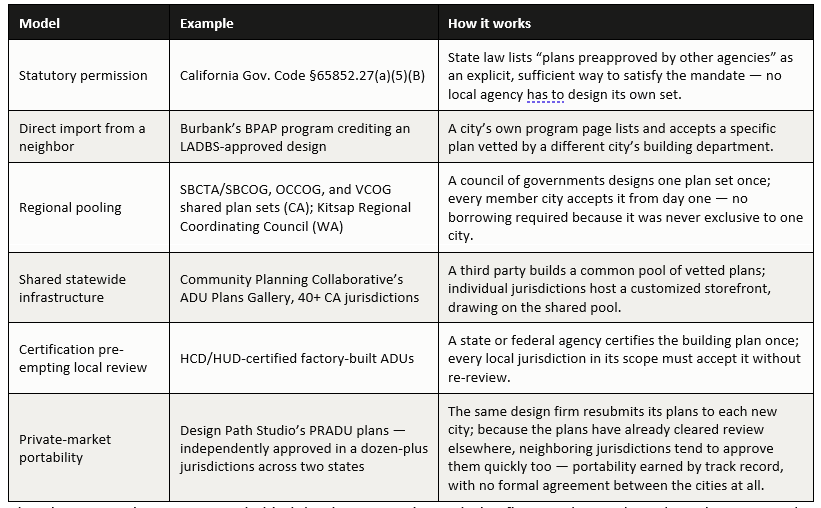
There’s no committee or statute behind that last row — just a design firm good enough, and consistent enough, that city after city says yes to the same plan set.

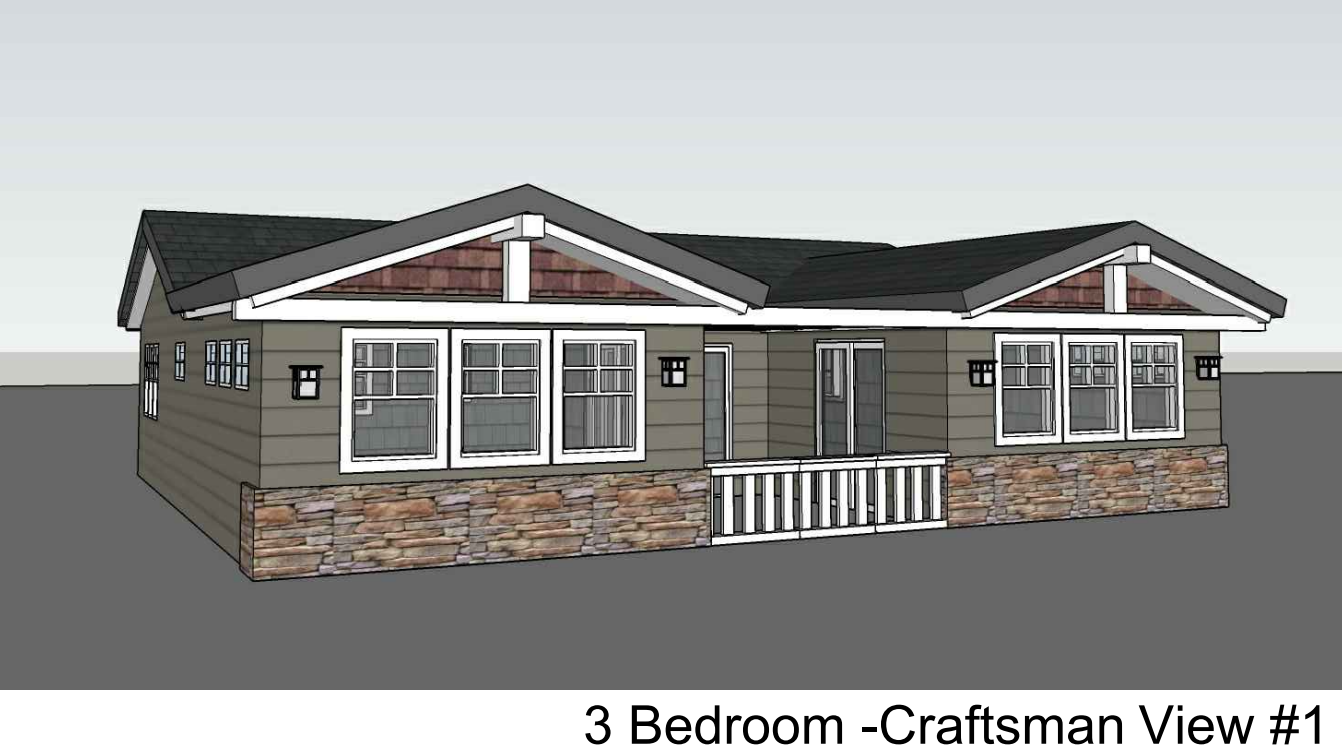
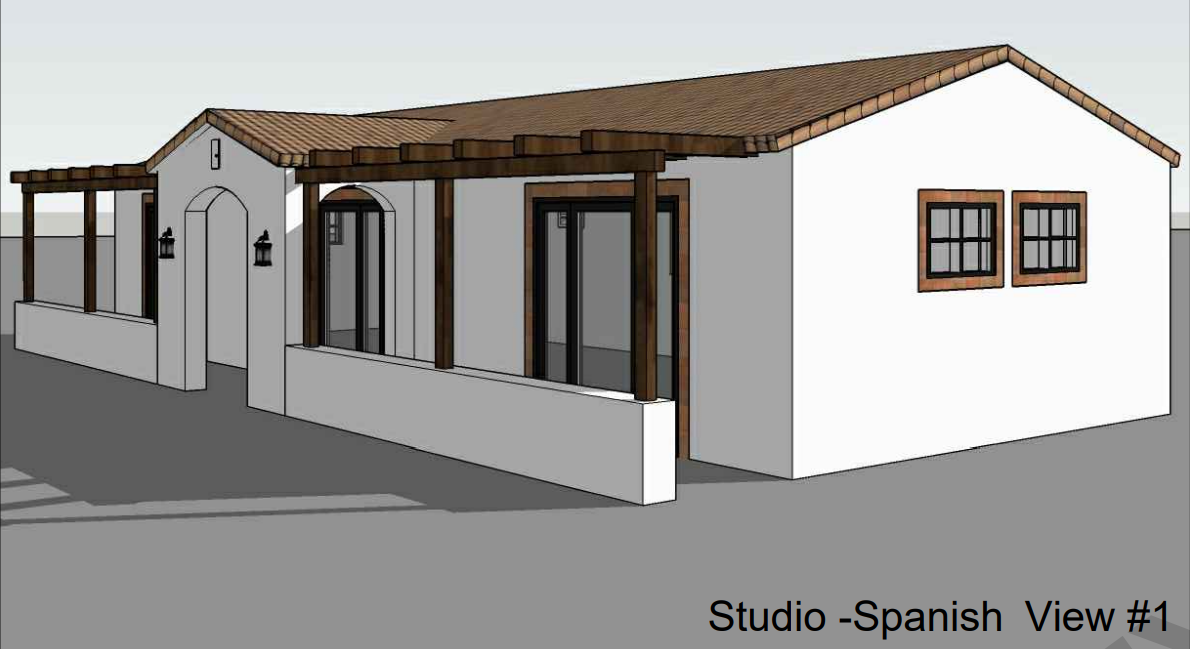
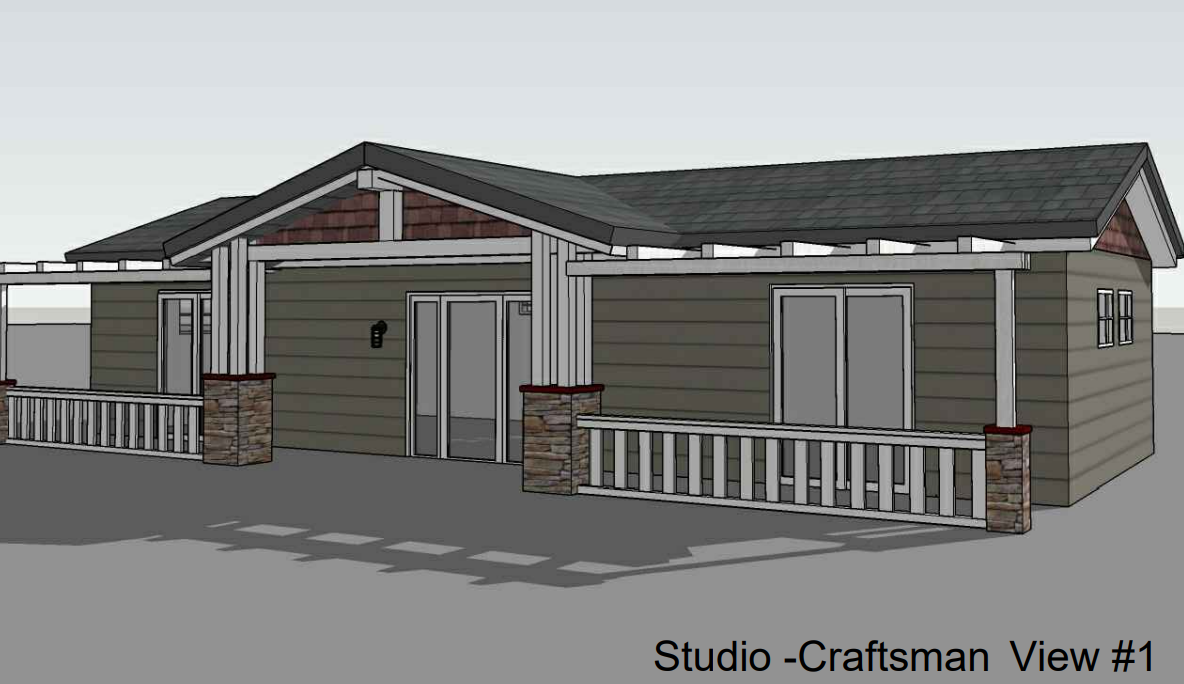
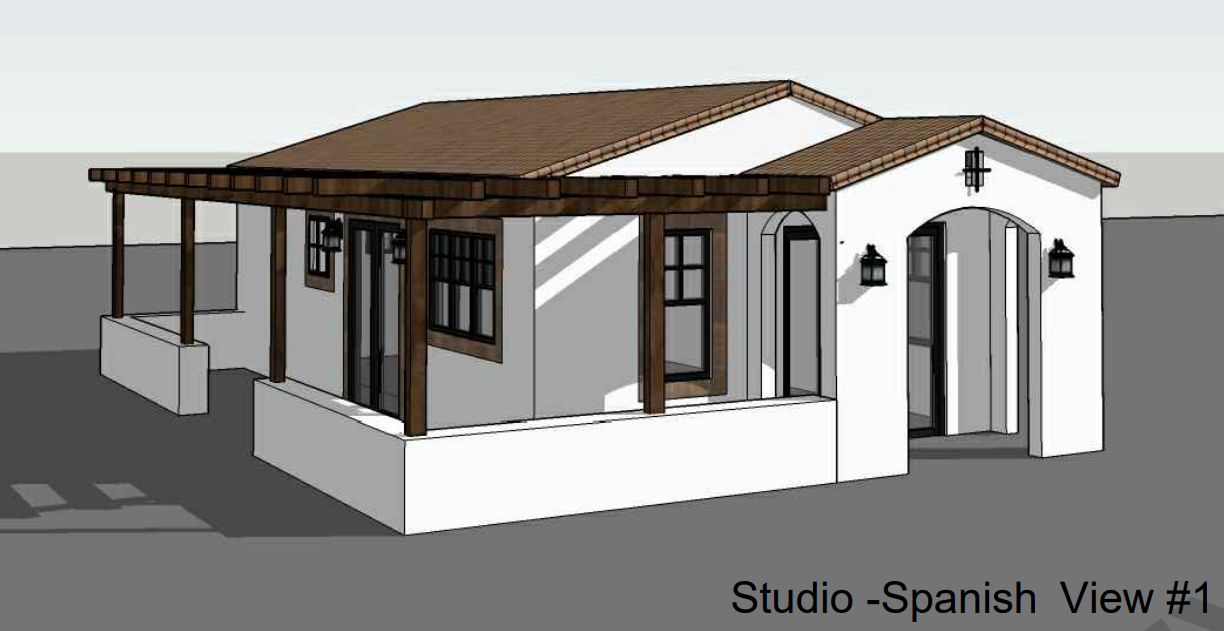
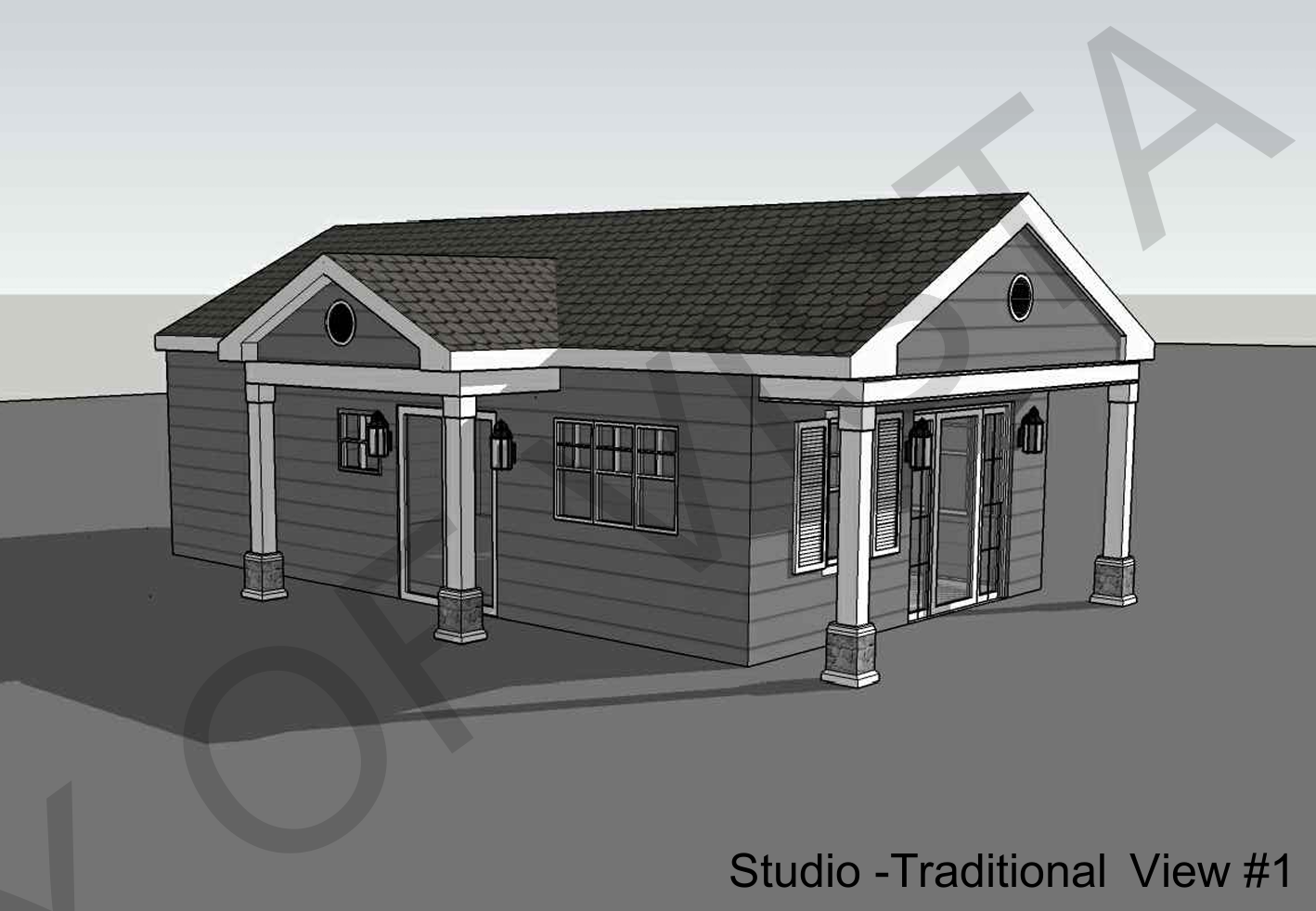
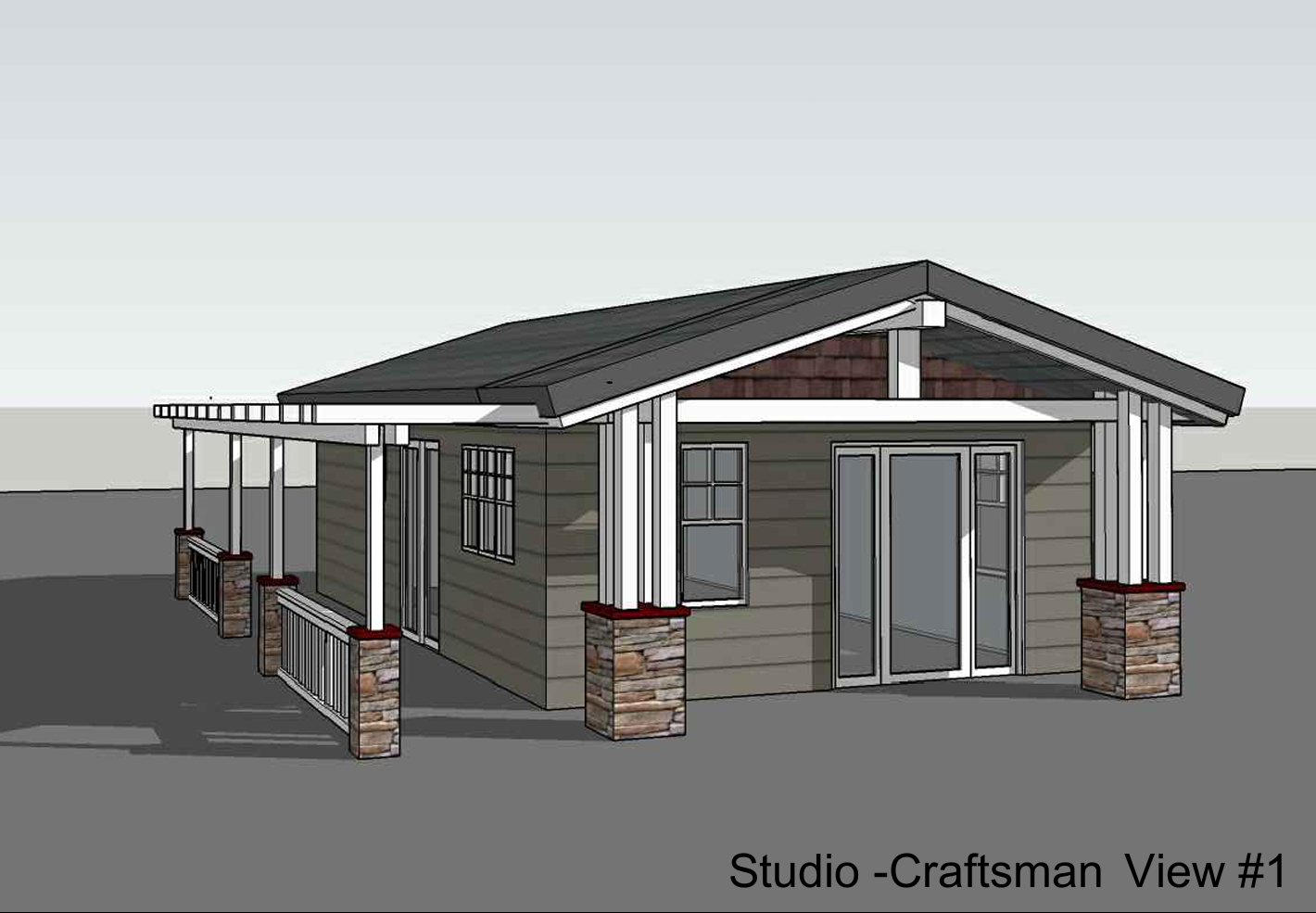
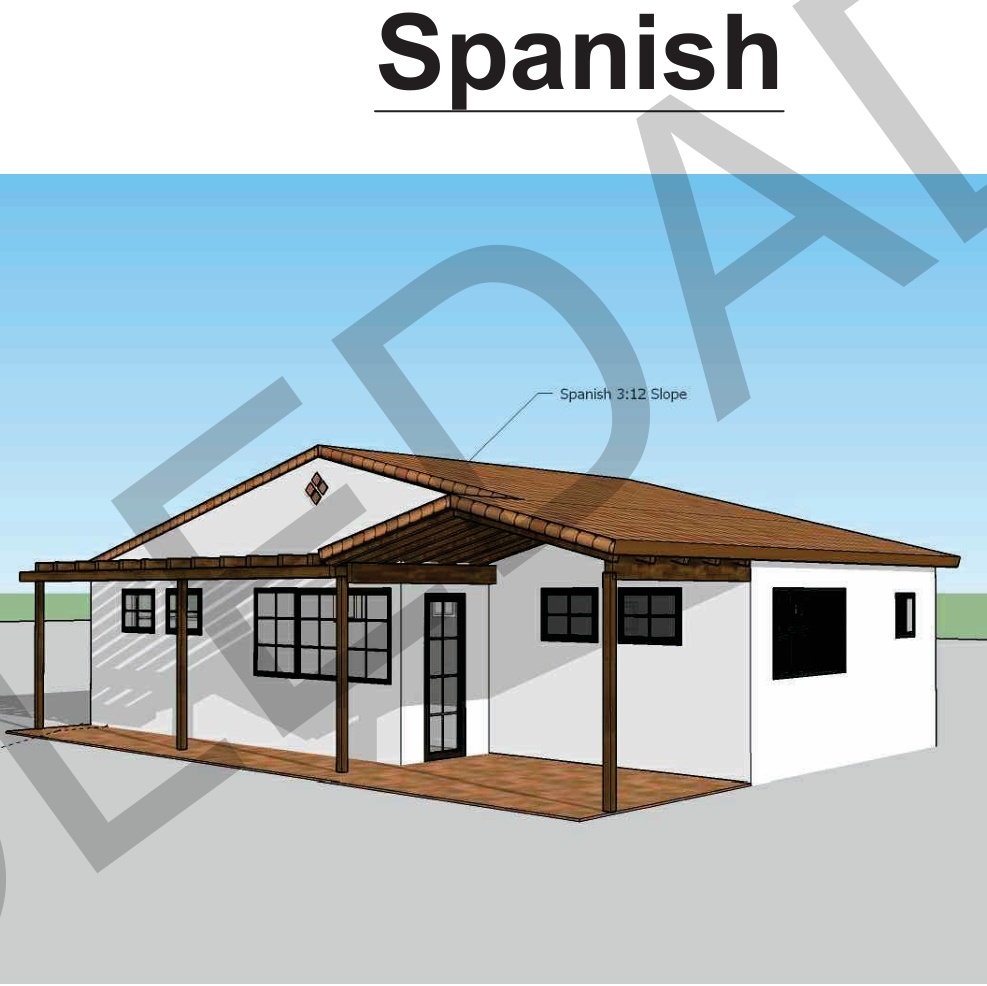
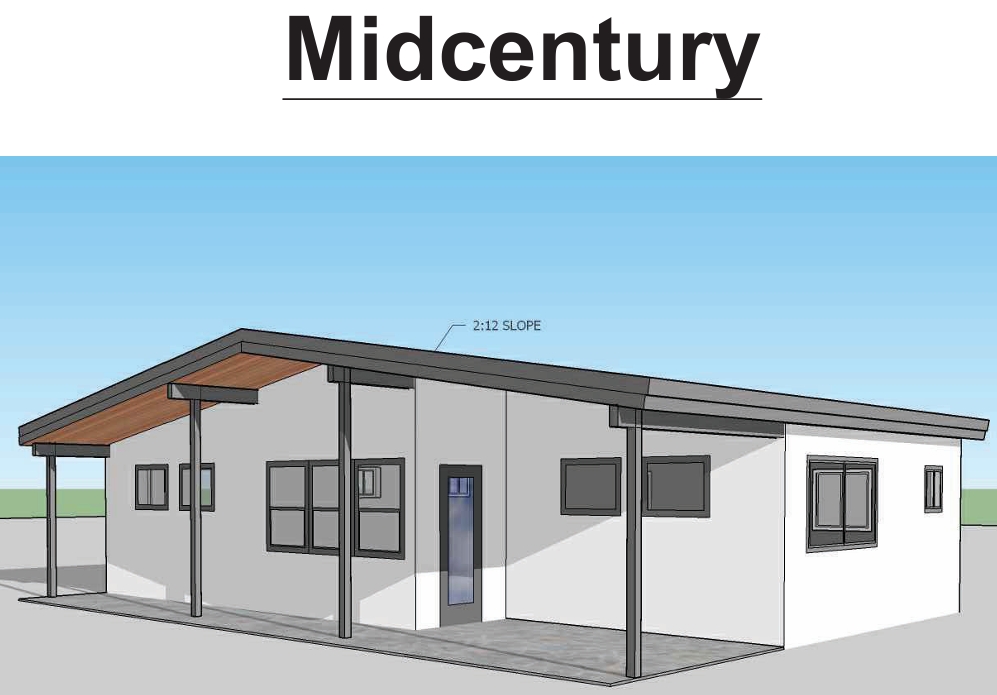
Design Path Studio’s Permit Ready Designs page.
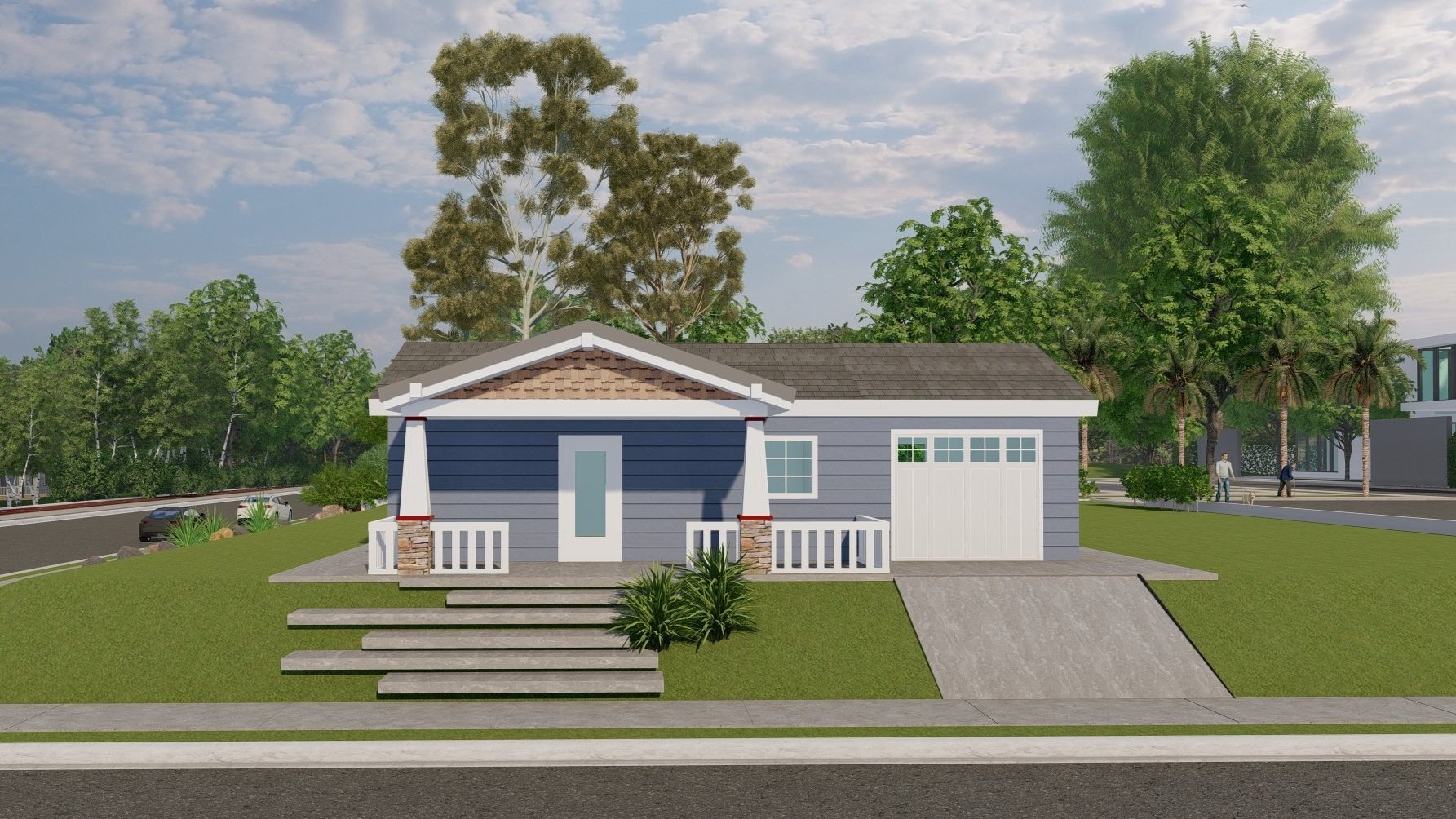
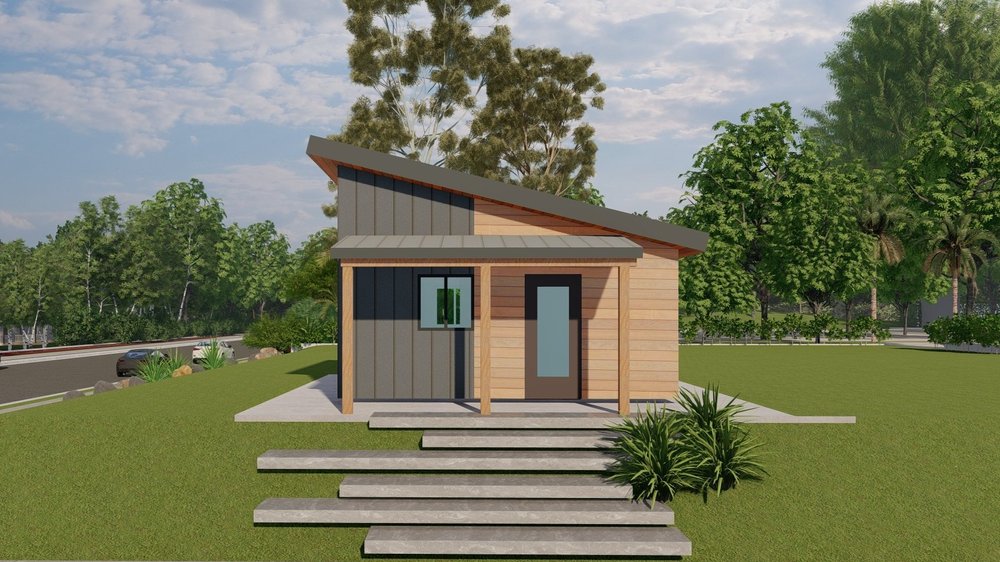
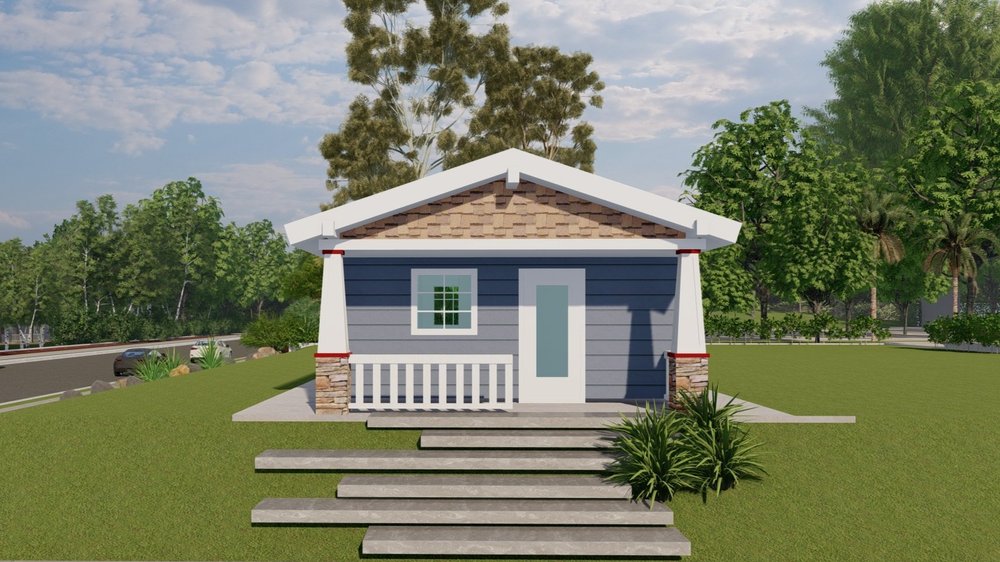
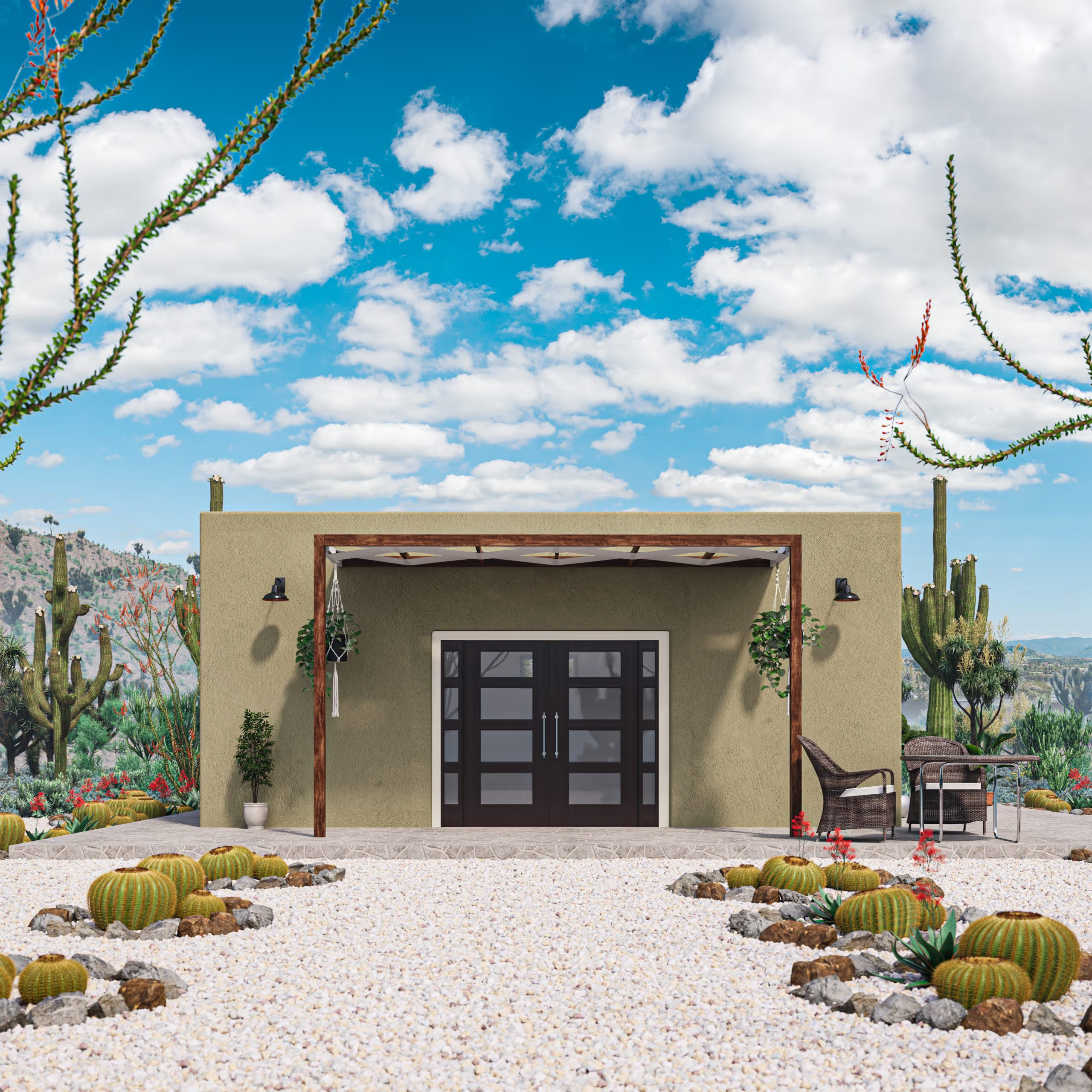
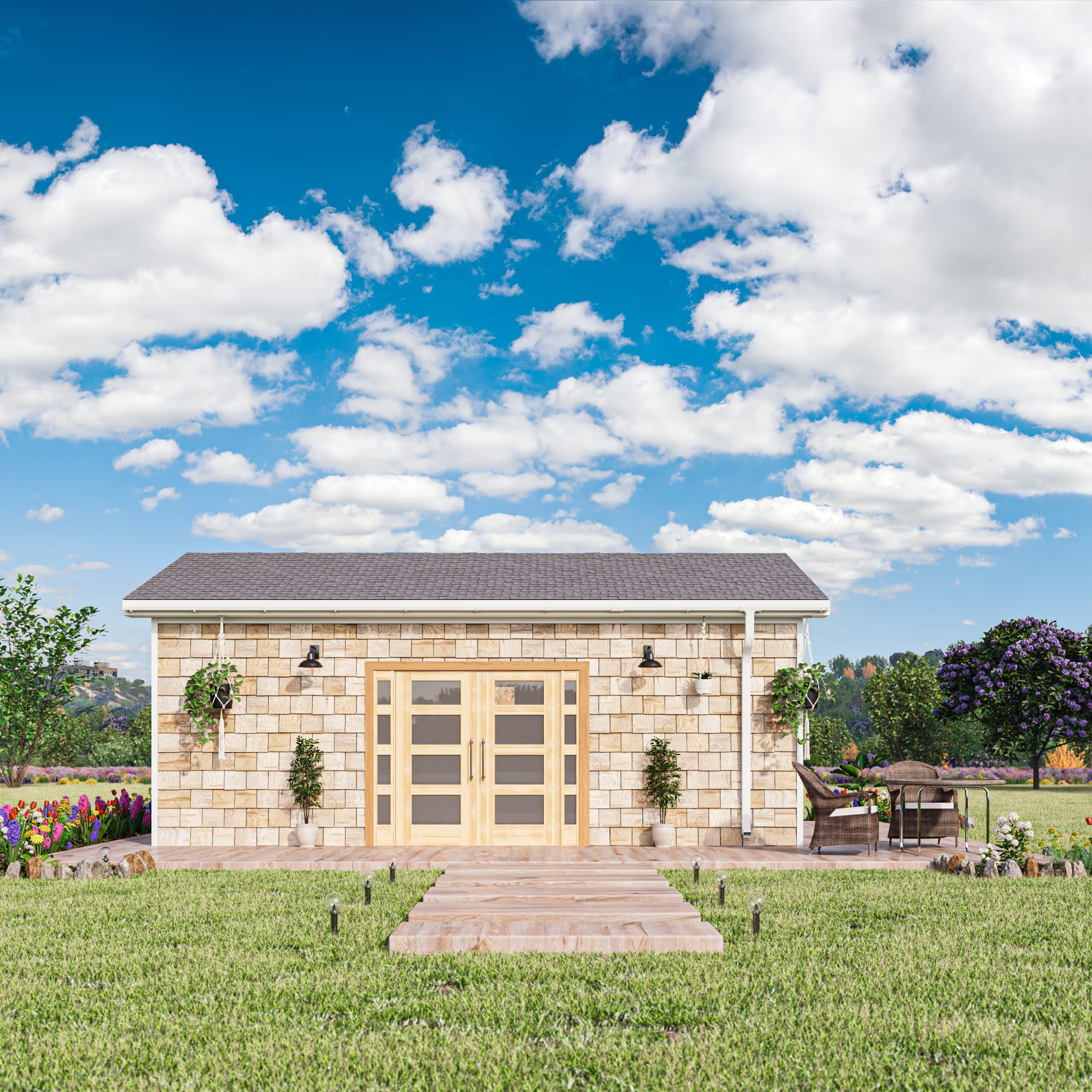
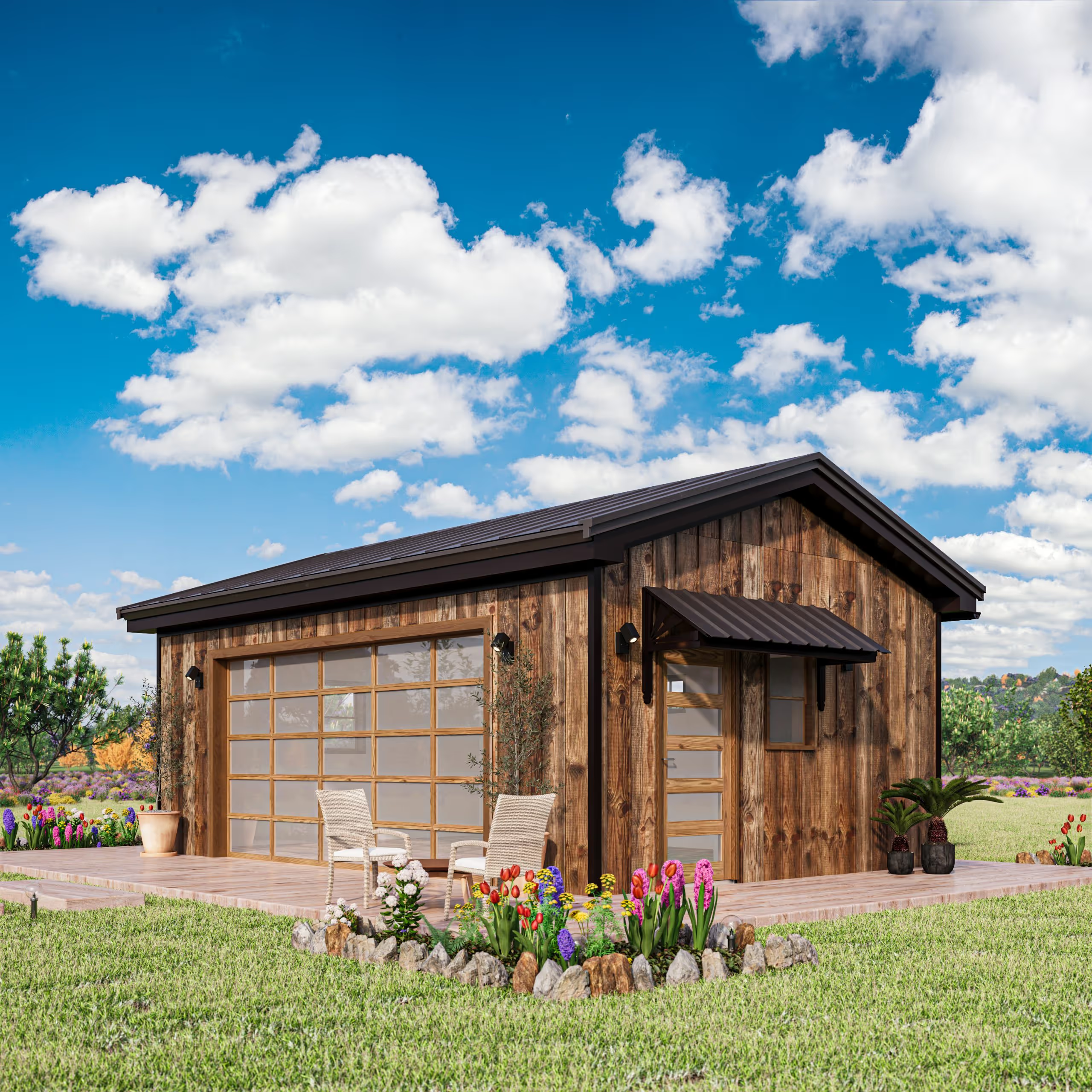
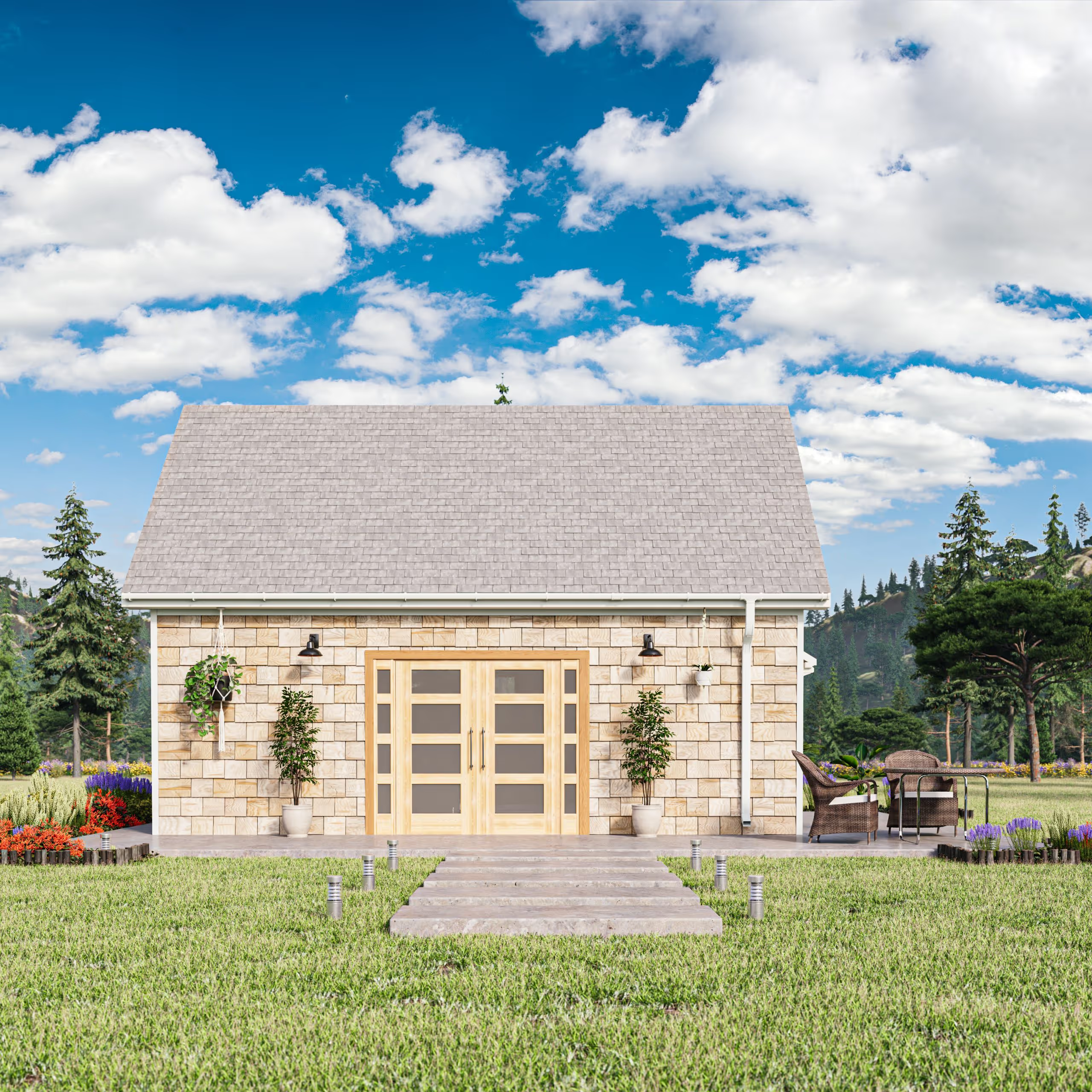
Design Path Studio’s “PRADU” line is now approved in Carlsbad, Chino, Encinitas, Marina, Menifee, the Town of Paradise, Santa Ana, Temecula, and Siskiyou County in California, plus Summit County, Colorado — roughly 638 plans in active use across those jurisdictions. The clearest single illustration of how this spreads sits in the Salinas Valley: a plan set approved in the City of Salinas was subsequently approved, separately, in the neighboring cities of King City, Soledad, and Gonzales — four independent building departments, each running its own review, each arriving at the same yes.
No regional agency coordinated it and no statute required it; the plan simply kept passing.
It isn’t just California anymore
Outside California, the clearest example of cities actually sharing one plan set is in Washington’s Puget Sound region. The Kitsap Regional Coordinating Council commissioned four ADU designs collaboratively, and Bainbridge Island, Bremerton, Port Orchard, and Poulsbo — four separate, independent cities — all accept all four plans. Each city got to name one model (Poulsbo, the smallest of the four, chose the Norwegian word “Lille,” meaning “little”), but none of them limited use of the plans to the city that named them.
That kind of deliberate regional pooling, more than one city informally poaching another’s plan after the fact, is what’s actually driving the national trend. A May 2026 Pew Charitable Trusts analysis found that, as of this year, roughly 40 U.S. jurisdictions have some form of preapproved building-plan program — up from fewer than 50 total mentions nationwide (nearly all in California) just a couple of years earlier. Hawaii County has run a plan-reuse library since 2012, now with 56 approved designs and 225 units permitted through it between 2021 and 2024. Fairfax County, Virginia allows any builder to reuse an already-approved plan within three years of its original approval. And the legislative wave that California started in 2023 has since reached Arizona, Oregon, and Maine, which passed their own ADU-preapproval laws in 2025, with Washington, Tennessee, New York, Pennsylvania, and Hawaii introducing similar bills in 2026. Vermont and Oregon are each now building state-level plan catalogs explicitly meant for local governments to adopt wholesale, which is the state-catalog model taken to its logical endpoint.
None of this required a homeowner to petition City B to accept City A’s paperwork. It required someone — a state legislature, a council of governments, a nonprofit, a state housing agency — to build the shared plumbing first.
A model built for one county has become a national pattern
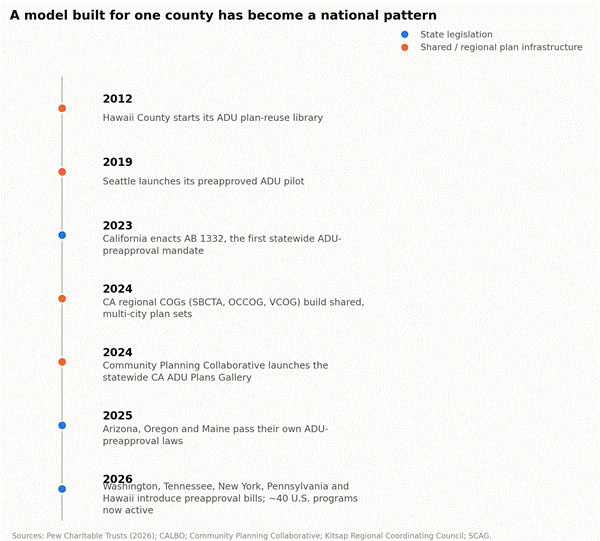
Timeline of key milestones from Hawaii County’s 2012 plan library through California’s AB 1332, regional plan-sharing programs, and the 2025–2026 wave of state preapproval legislation.
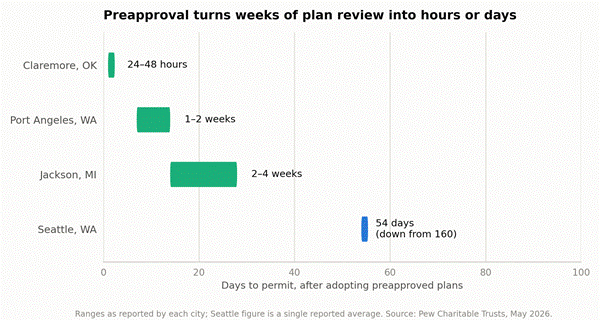
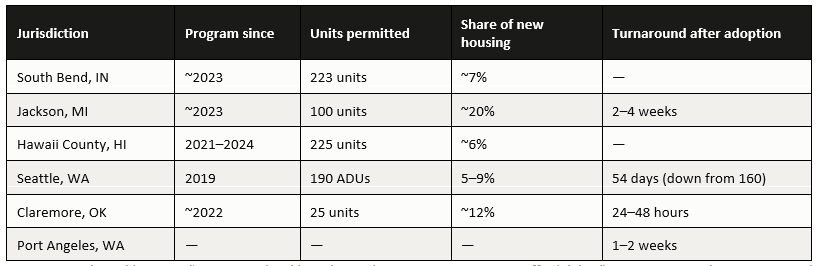
The payoff shows up in permit timelines, not just paperwork
The point of all this plumbing is speed. Cities that adopted preapproved plans — whether their own, a neighbor’s, or a regional set — report some of the sharpest permitting-time reductions in the housing-policy literature:
Where the plans actually live today
For all the policy momentum, the geography of actual plan libraries is still lopsided. aduplans.com — also reachable at praduplan.com, a shorthand for “permit-ready ADU” that redirects straight to the same library — describes itself as the largest permit-ready ADU database and lets homeowners, builders, and developers search plans by location across all 50 states. It currently lists plans in 32 states, and the distribution is steep:
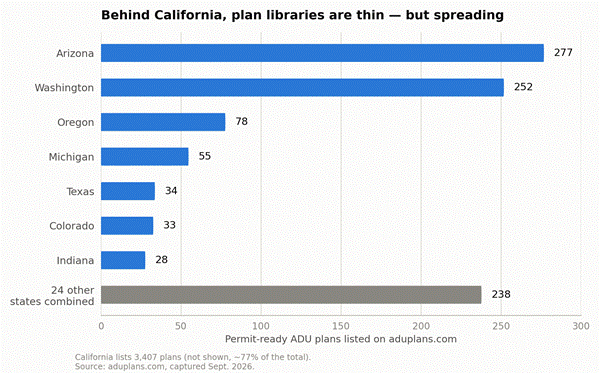
Permit-ready ADU plan counts by state, aduplans.com: Arizona 277, Washington 252, Oregon 78, Michigan 55, Texas 34, Colorado 33, Indiana 28, and 24 other states combined at 238 plans.
California alone lists 3,407 plans on the platform — roughly three-quarters of every plan in the database — a direct downstream effect of AB 1332 forcing every California jurisdiction to stand up a program. Arizona and Washington are a distant second and third, both states with their own recent legislative pushes; everywhere else remains sparse, and several states are listed as “coming soon.” A national database like this is itself part of the infrastructure this piece is about: it doesn’t just catalog plans, it’s one of the mechanisms by which a plan drawn for one market becomes discoverable — and usable — somewhere else entirely.
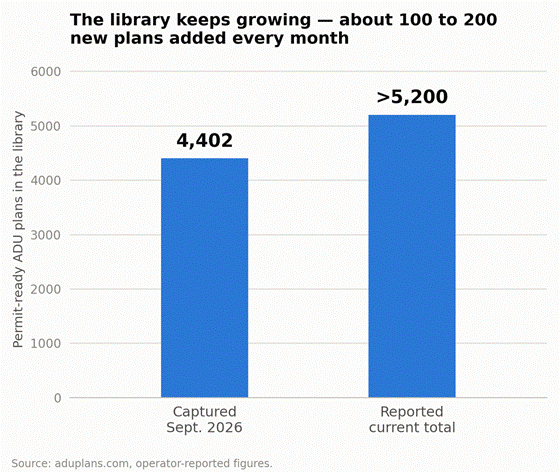
That snapshot is already out of date by the time you read it, on purpose. The library is refreshed monthly, and its operators report it has already passed 5,200 plans — up from the 4,402 captured above — with roughly 100 to 200 new plans added every month as more designers and jurisdictions come on board.
From “it’s approved somewhere” to “it fits my lot”
Every model above answers the policy question — whose plan review counts, and where. None of them answers the question the homeowner actually has standing in their backyard with a tape measure: will any of this fit my lot, once setbacks, easements, and the existing garage are accounted for?
That’s the gap a tool like FrameUpNow’s Plan Fit Visualizer is built to close, and it’s aimed at anybody who needs an answer, not just homeowners — contractors sketching options with a client, real estate agents sizing up a listing’s ADU potential, or a homeowner comparing lots before they buy. Enter an address or manual lot dimensions, and it places real ADU footprints on the real parcel, checked against setback rules and available space, then surfaces matching plans from FrameUpNow and the aduplans.com library — plans already approved in many U.S. jurisdictions — for comparison. It’s free, requires no account, and takes a few minutes.
It's a small illustration of the same idea running through this whole piece: once a plan has already been vetted somewhere, the remaining work shouldn't be figuring out the rules from scratch — it should be checking whether it fits.
The honest caveat
It would overstate the evidence to say jurisdictions “are likely” to honor each other’s plans as a general rule. Pew’s researchers, after cataloging roughly 40 U.S. programs, concluded that most remain locally focused — designed, reviewed, and used inside one city’s or county’s boundary, with no mechanism for a neighboring jurisdiction to draw on them. Plenty of cities running AB 1332 programs in California built their own plan libraries from scratch and show no sign of importing anyone else’s designs. “Preapproved” defaults to meaning “preapproved by us,” unless a jurisdiction, a regional agency, or a state legislature has deliberately built a bridge.
And even where that bridge exists, it only ever covers the building-plan review. Every example above — Burbank, Kitsap County, the California COGs, the statewide gallery — still requires a full, separate, local review of the site-specific package: lot layout, setbacks, tree removal, utility connections, fire access, whatever a given parcel requires. A pre-approved plan shortens the process; it has never eliminated the local permit.
So the trend is real, but it’s a trend toward building the infrastructure that makes reciprocity possible, not toward an established norm that any city will simply wave through any other city’s paperwork. California shows what happens when a state mandates that infrastructure outright. Washington’s Kitsap County shows what happens when a handful of cities build it voluntarily. The 2025–2026 wave of state legislation elsewhere suggests more states are about to find out which model works for them.
The trend is toward building the infrastructure that makes reciprocity possible — not toward an established norm that any city will simply wave through any other city’s paperwork.