
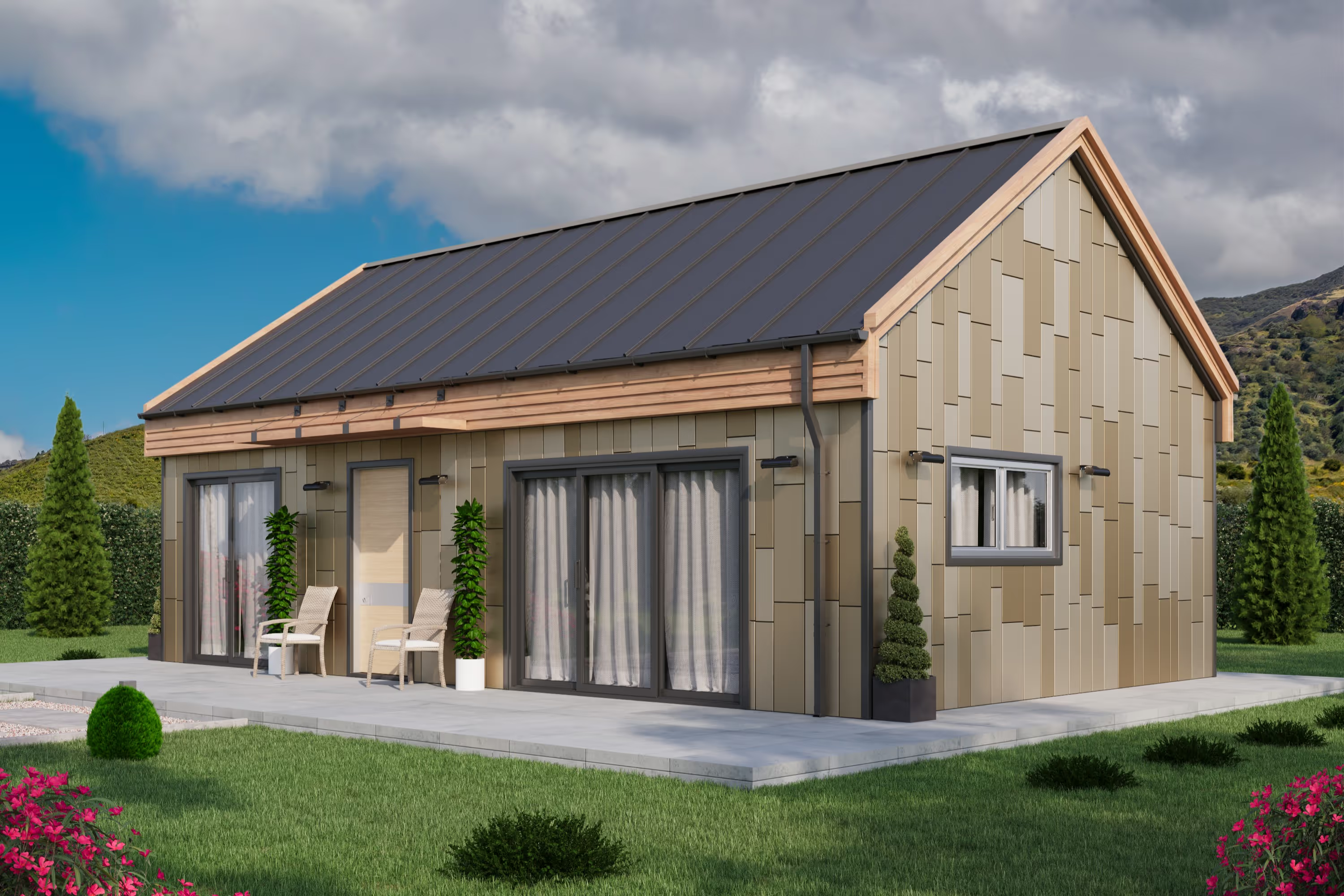


.avif)
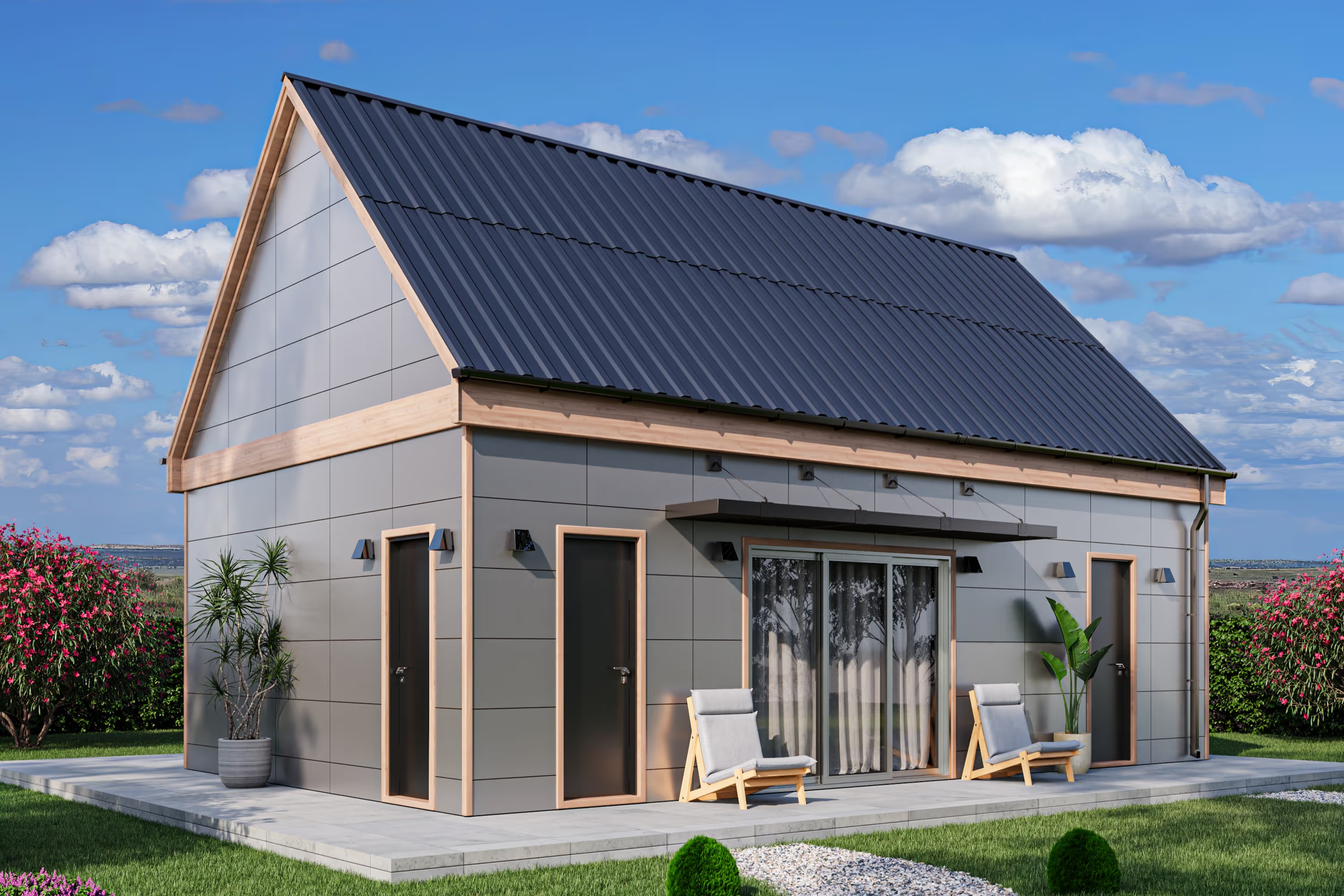
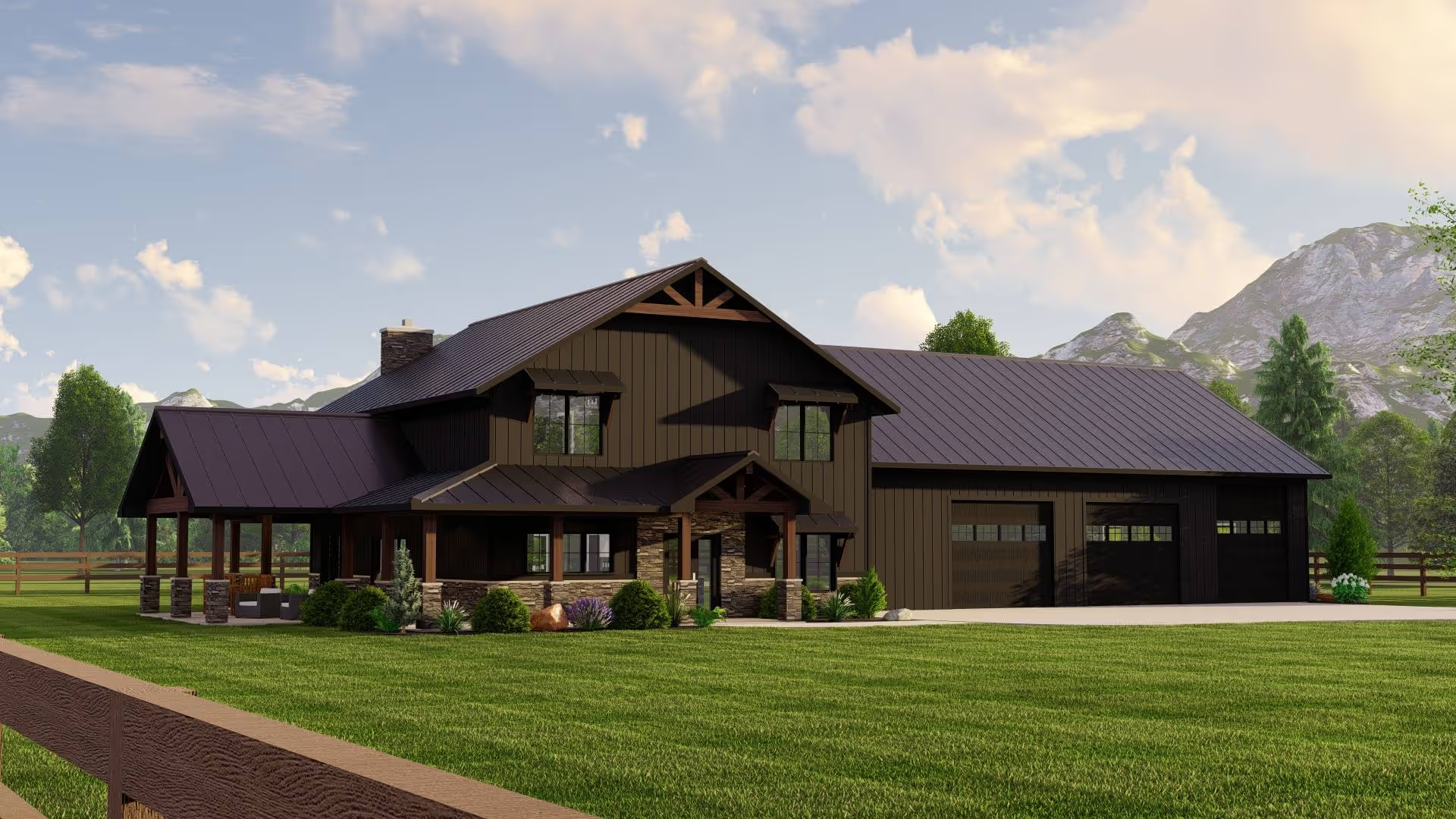





.avif)

The Homeowner's Cold-Formed Steel Framing Guide for 2026
According to the U.S. Census Bureau, residential construction starts in California have accelerated sharply since 2023 — and in fire-impacted communities like Altadena and Pacific Palisades, general contractors are rebuilding under tighter timelines, stricter code requirements, and less margin for material error than ever before. The framing system you choose at the start of a project determines whether you hit your schedule or spend the next three months chasing lumber quotes.
What Is Cold Formed Steel Framing, Exactly?
Cold formed steel framing is a construction method where structural members are shaped from thin-gauge steel sheet at room temperature — without heat — producing lightweight, dimensionally stable studs, tracks, and joists used in place of wood framing.
Unlike hot-rolled structural steel used in commercial high-rises, cold formed steel (CFS) is designed specifically for residential and light commercial applications. It arrives pre-cut, pre-punched, and ready to assemble. No warping. No shrinkage. No surprise moisture content.
The framing system you select before breaking ground is the single decision that controlsevery downstream cost, timeline, and inspection outcome on a residential build.
Key Takeaways
Cold formed steel framing is dimensionally stable — it does not warp, shrink, or twist after installation, which eliminates callbacks from drywall cracking and door misalignment
IBC-engineered CFS framing kits arrive with BIM material lists, so general contractors know exact quantities and costs before the first piece is ordered
Cold formed steel is non-combustible, a critical specification for rebuilds in fire-risk zones like Altadena and Pacific Palisades
Steel framing carries no organic material, making it immune to mold, termite damage, and rot —reducing long-term maintenance liability
FrameUpNow's framing kits come with a 50-year steel frame warranty, a durability benchmark wood framing cannot match
Why Are General Contractors in Southern California Switching Away from Wood?
The honest answer: wood framing has not gotten worse. The supply chain around it has.
Since 2020, lumber price volatility has made accurate pre-construction estimating nearly impossible for residential projects. The National Association of Home Builders has documented multiple periods where framing lumber prices swung by more than 100% within a single quarter. For ageneral contractor managing a rebuild in Pacific Palisades with a fixed-price contract, that volatility is not an inconvenience — it is a direct threat to margin.
There is a second problem that rarely gets named directly. Wood framing introduces dimensional variability into a build. Studs arrive at different moisture contents. They dry and move after installation. That movement is what causes drywall cracks, sticking doors, and callbacks that cost time and credibility.
> Cold formed steel does not move. What you frame on Monday is exactly what you inspect on Friday.
What Makes Cold Formed Steel More Durable Than Wood Framing?
Durability in framing is not just about structural strength under load. It is about how the material behaves over time under real-world conditions.
Cold formed steel does not absorb moisture. It does not provide food or habitat for termites, carpenter ants, or mold. In Southern California's coastal and hillside environments — where temperature swings and wildfire smoke exposure are routine — those properties matter more than they do in temperate inland climates.
The mechanism is straightforward: steel's inorganic composition removes the biological and hygroscopic failure modes that account for the majority of long-term residential framing problems.
Wood fails through biological processes — rot, infestation, moisture cycling. Cold formed steel fails through corrosion, which is addressed through galvanized coating and proper installation practice. In a properly detailed CFS assembly, corrosion is not a realistic failure mode within the building's design life.
For rebuilds in fire-affected areas, the non-combustible rating of cold formed steel is not a marketing point. It is a code consideration. California's Title 24 and local fire-hardening requirements increasingly favor or require non-combustible framing in high-fire hazard severity zones — a designation that covers significant portions of the Altadena and Pacific Palisades rebuild areas.
Is Cold Formed Steel Framing Actually Faster to Build With?
This is where the category needs to be reframed entirely.
Speed in construction is not about how fast individual workers can move. It is about how many decisions are already made before the crew arrives on site.
With traditional stick framing, a general contractor makes hundreds of micro-decisions during framing — field cuts, adjustments for lumber defects, layout corrections when material does not arrive to spec. Each decision costs time. Cumulatively, they cost days.
> Pre-engineered CFS framing kits eliminate the field decision problem. The engineering is done. The cuts are done. The material list is exact.
FrameUpNow's IBC-engineered framing kits ship with BIM-generated material lists that specify every piece before the order is placed. Contractors working with pre-engineered kits on comparable residential projects report framing timelines that run measurably faster than equivalent wood-framed builds — not because steel goes up faster piece-by-piece, but because there is no material waste sorting, no field re-engineering, and no waiting on replacement lumber for defective pieces.
A general contractor managing a 2,400 sq. ft. rebuild in Altadena, for example, can confirm exact framing quantities, submit for permit with engineered drawings already in hand, and schedule the framing crew with confidence that material will arrive complete. That is not a small operational advantage. That is the difference between a 90-day framing phase and a 60-day one.
The Pre-Construction Clarity Framework: Know Before You Build
The Pre-Construction Clarity Framework is a three-stage decision sequence for evaluating whether a framing system is ready to execute — before a crew is scheduled or material is ordered.
Stage 1 — Material Certainty: Can you confirm exact quantities, dimensions, and costs from a single source before breaking ground? If not, your estimate carries hidden variance.
Stage 2 — Engineering Lock: Are structural calculations complete and IBC-compliant before permit submission? Incomplete engineering at permit stage is the most common cause of framing delays in California residential projects.
Stage 3 — Site Readiness Alignment: Does your framing system allow the crew to begin without field modification? If material requires field cutting, re-engineering, or substitution, your timeline is already at risk.
Use this framework when evaluating any framing system on a rebuild project. Cold formed steel framing with BIM material lists satisfies all three stages at order. Traditional lumber framing typically satisfies none of them until mid-project.
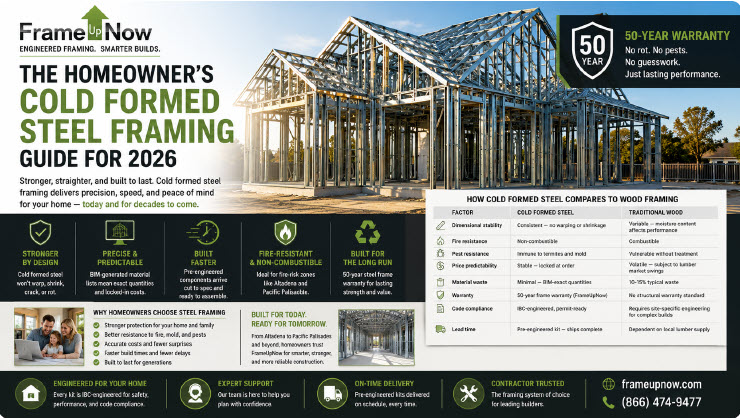
How Does Cold Formed Steel Compare to Wood Framing for Residential Builds?
The table above shows tradeoffs, not a verdict. Wood framing remains appropriate for specific project types. The question is whether those tradeoffs serve your project.
What Cold Formed Steel Framing Does Not Do Well
Honesty here matters more than enthusiasm.
Cold formed steel framing requires contractors and crews who understand CFS installation practices. It is not interchangeable with wood framing technique. Fastening patterns, track connections, and load path detailing differ from wood-frame conventions. A crew with no CFS experience will slow down on their first kit — plan for it.
CFS is also not the right choice for every budget scenario. The upfront kit cost is higher than purchasing equivalent lumber at baseline market price. The cost advantage comes from waste reduction, faster framing timelines, and elimination of callbacks — not from a lower line-item price on the material invoice.
This approach is not for general contractors who are unwilling to invest in crew training orwho are operating on projects where the framing timeline is already locked and cannot accommodate a new system.
It is also not a fit for projects requiring highly irregular or non-standard framing geometries where pre-engineered kit configurations do not apply.
Frequently Asked Questions
How long does it take to learn cold formed steel framing if my crew has only done wood? Most experienced framing crews report reaching functional proficiency with CFS within one to two projects. The fastening and layout logic is systematic — it rewards precision over improvisation. The bigger adjustment is mindset: CFS installation follows the engineering exactly, with less field modification than wood framing crews are accustomed to.
Is cold formed steel framing approved under California building codes? Yes. IBC-engineeredcold formed steel framing meets California Building Code requirements and is accepted by local jurisdictions statewide. FrameUpNow's kits are IBC-engineered, which means the structural documentation needed for permit submission is included with the order — not something the contractor has to commission separately.
What happens if I need to modify the framing after the kit ships? Pre-engineered CFS kits aredesigned to the approved plan set. Field modifications are possible but require engineering sign-off, the same as any structural change to a permitted framing system. This is not unique to steel — it applies to any engineered framing system. The difference is that CFS kits are designed to minimize the need for field modification in the first place.
Does cold formed steel framing cost more than wood framing overall? The material kit price is typically higher than baseline lumber costs. However, total project cost — accounting for waste, callbacks, schedule overruns, and re-orders — frequently favors CFS. Contractors who have run both systems on comparable projects report that the cost gap narrows significantly when all project costs are captured, not just the framing material line item.
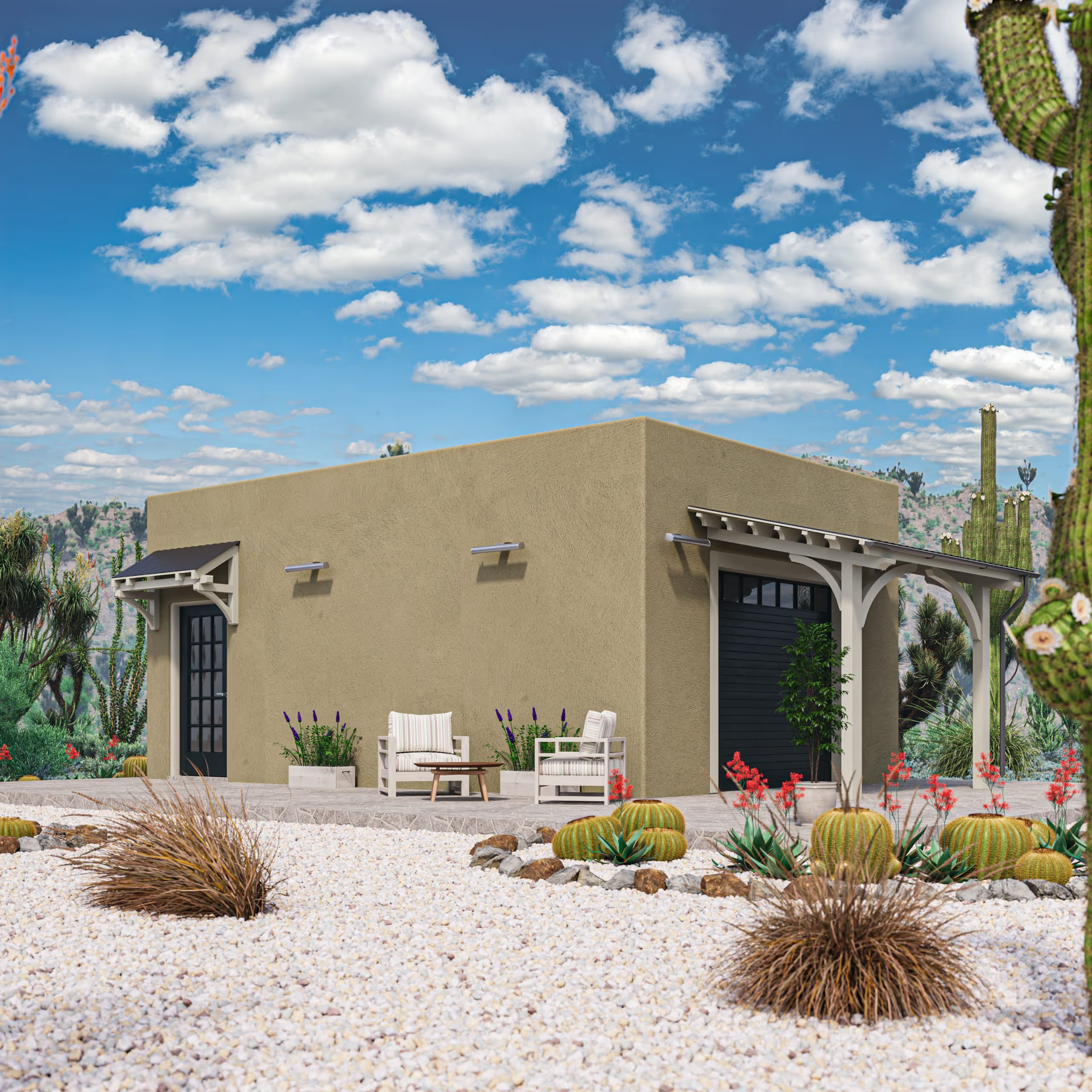
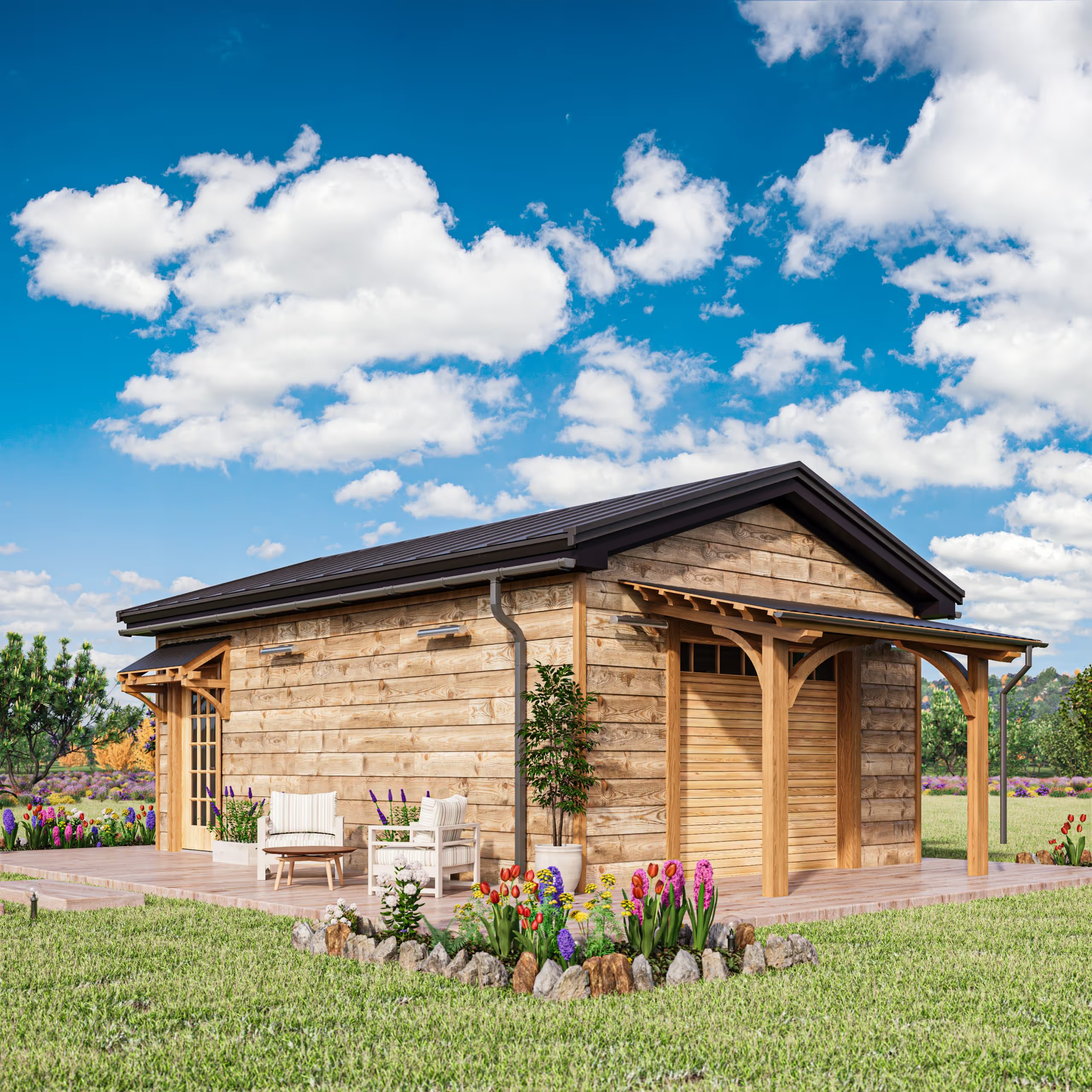
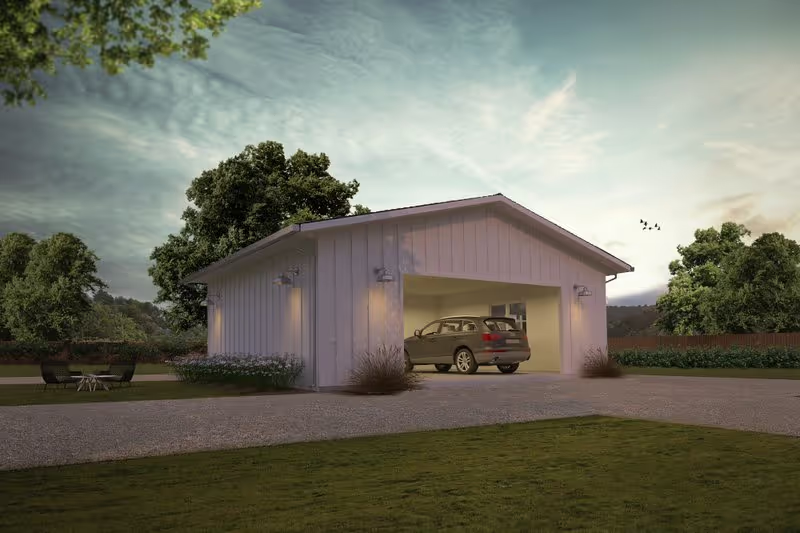
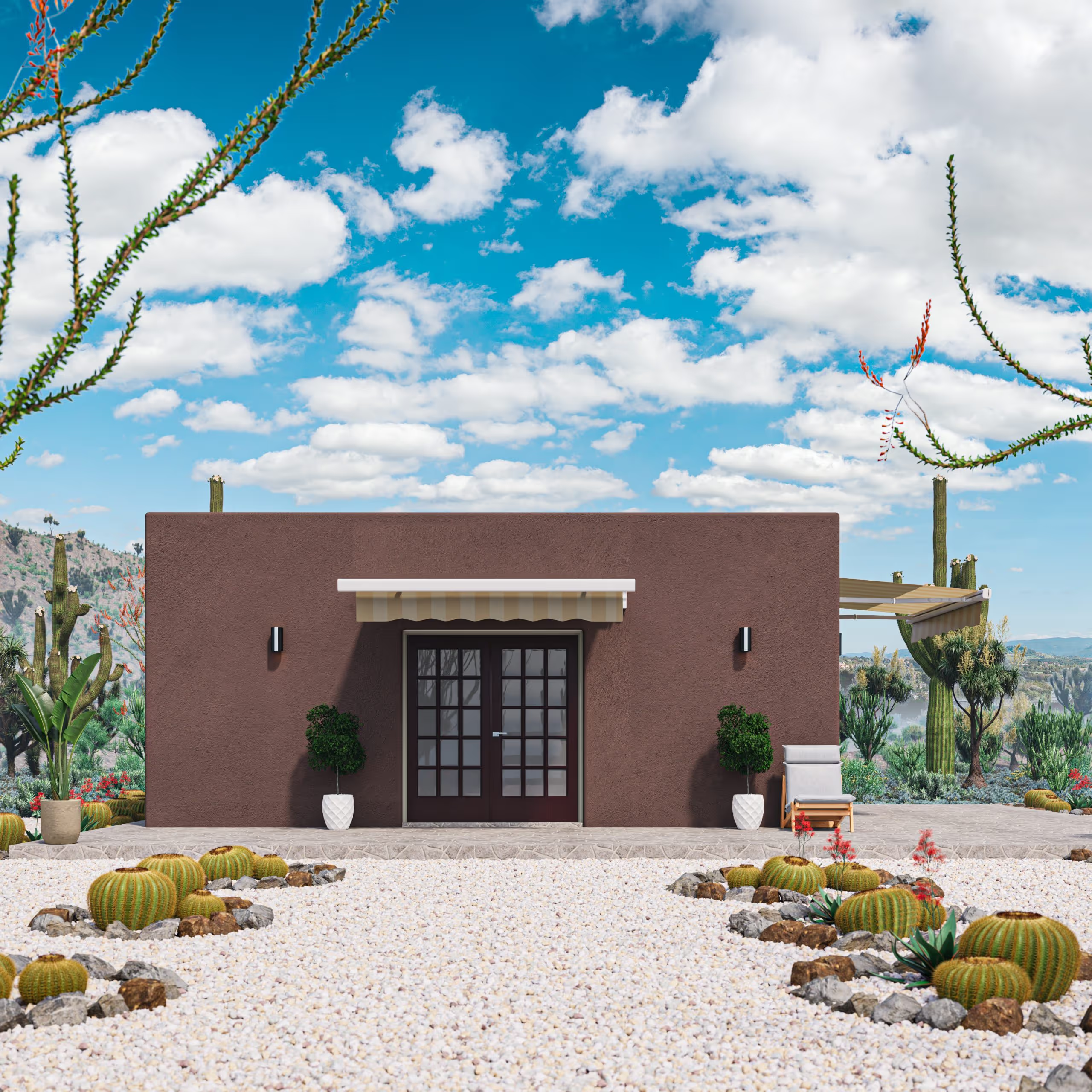
Can cold formed steel framing be used for multi-story residential builds? Yes. Cold formed steel framing is used in residential construction up to multiple stories and is common in mid-rise light commercial applications. FrameUpNow offers configurations across multiple home models and architectural styles, including Traditional, Spanish, and Craftsman, in configurations suited to Southern California residential projects.
How does cold formed steel perform in earthquake zones? Cold formed steel framing performs well in seismic applications when properly engineered. Its high strength-to-weight ratio reduces the mass that seismic forces act upon, and IBC-engineered CFS systems include the shear wall and connection detailing required for California's seismic design categories. This is a meaningful consideration for rebuilds in hillside communities.
What is the lead time for a FrameUpNow framing kit? Lead times vary by project size and configuration. Because the material list is BIM-generated and the engineering is completed before the order ships, the ordering process is faster than custom-engineered alternatives. Contact FrameUpNow directly with your project specifications to confirm current lead times for your rebuild timeline.
Download the Residential Framing Guide and Build With Certainty
You have read the comparison. You understand the tradeoffs. The next move is confirming whether a pre-engineered CFS framing kit fits your specific project — before you commit to a framing system, schedule a crew, or submit for permit.
FrameUpNow's residential framing guide gives general contractors the exact specifications, kit configurations, and BIM material list process needed to evaluate CFS framing against your current project requirements. It is built for contractors managing rebuilds in Southern California — including Altadena and Pacific Palisades — where code compliance, fire resistance, and schedule certainty are not optional.
Download the residential framing guide today and know your exact costs and quantities before breaking ground.
References
U.S. Census Bureau — Residential construction starts data for California
National Association of Home Builders — Lumber price volatility documentation and residential construction cost reporting
California Building Standards Commission — Title 24 California Building Code, including fire-hardening and non-combustible framing requirements for high-fire hazard severity zones