
How Steel Framing Can Make Your Next Build Faster and More Predictable
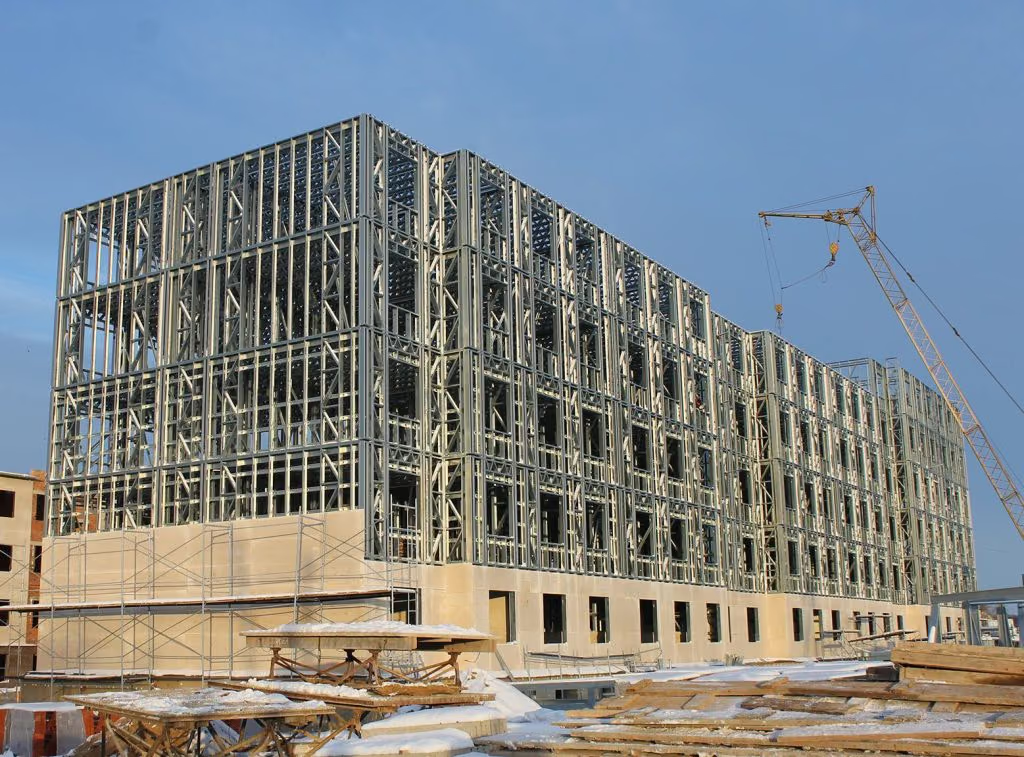

Cold-formed steel framing can simplify residential and commercial construction by combining precision manufacturing, engineered components, dimensional stability, and efficient field assembly. When the frame is designed and manufactured before it reaches the jobsite, builders can spend less time making framing decisions in the field and more time assembling a structure that has already been planned.
For homeowners, builders, developers, and general contractors, the advantage of cold-formed steel framing is not simply the material itself. It is the opportunity to create a more coordinated path from design and engineering to manufacturing and construction.
That can make the framing stage faster, easier to understand, and more predictable.
What Is Cold-Formed Steel Framing?
Cold-formed steel (CFS) framing is a construction method that uses lightweight structural steel members to create walls, roof systems, floor systems, and other structural components.
Steel sheet is formed into precisely shaped structural members such as studs and tracks. These components can then be engineered and manufactured for specific locations within a building.
Unlike conventional wood framing, cold-formed steel does not shrink, warp, twist, split, or rot. It is also non-combustible and is not a food source for termites.
These characteristics make CFS suitable for many residential and commercial applications, including:
- Single-family homes
- ADUs and casitas
- Build-to-rent homes
- Multifamily projects
- Garages and accessory structures
- Selected commercial buildings
Learn more about the benefits of cold-formed steel framing.
Why Can Steel Framing Be Faster to Assemble?
Steel framing can reduce framing time when components are engineered, manufactured, organized, and delivered ready for efficient field assembly.
The speed advantage does not come simply from using steel.
It comes from moving more decisions off the jobsite and into the design, engineering, and manufacturing process.
With a coordinated steel framing system, components can be manufactured to specified dimensions before they reach the project. This can reduce field measuring, cutting, material sorting, and other tasks that can slow conventional framing.
FrameUpNow takes this concept further by connecting engineered plans with precision manufacturing.
Instead of sending raw steel to a jobsite and expecting the framing crew to determine how everything goes together, the objective is to resolve as much of the structure as possible before construction begins.
The more that is known before the frame arrives, the fewer decisions have to be made in the field.
How Does Precision Manufacturing Make Construction Easier?
Construction becomes more predictable when framing components are manufactured according to coordinated building information.
Precision manufacturing can help builders by providing:
- Consistent framing dimensions
- Clearly defined structural components
- Accurate openings and connections
- Reduced dependence on field cutting
- More predictable material requirements
- A clearer assembly sequence
Steel also maintains its dimensions. It does not absorb moisture and subsequently shrink, twist, or warp in the same way wood framing can.
That dimensional stability can help maintain alignment as the structure is assembled and as construction moves into later stages.
For builders, the benefit is not just a straighter frame.
It is greater certainty about what they are going to build before they start building it.
Is Steel Framing Lightweight and Easy to Handle?
Cold-formed steel framing has a high strength-to-weight ratio, allowing relatively lightweight structural members to provide significant structural capacity when properly engineered.
The weight and configuration of individual components vary considerably by project, so steel should not simply be described as lighter than every alternative building material.
However, many cold-formed steel components can be handled and assembled efficiently by framing crews using standard construction tools and appropriate equipment.
FrameUpNow also provides educational resources to help builders and homeowners understand the steel framing process.
See how DIY steel frame building works.
How Versatile Is Cold-Formed Steel Framing?
Cold-formed steel can be engineered for a wide variety of building sizes, architectural styles, roof configurations, and floor plans.
A steel-framed home does not have to look like a metal building.
The steel frame becomes the structural skeleton behind the finished architecture. Exterior materials, roofing, drywall, cabinetry, flooring, and other finishes determine what occupants ultimately see.
This allows steel framing to support contemporary, traditional, ranch, farmhouse, modern, and many other architectural styles.
Homeowners and builders can explore existing steel frame homes, ADUs, casitas, and building plans or use steel framing as part of a custom building project.
Is Cold-Formed Steel Strong?
Yes. Cold-formed steel has a high strength-to-weight ratio and can be structurally engineered for the loads that apply to a particular building and location.
But simply saying that “steel is stronger than wood” does not tell the whole story.
Structural performance depends on the complete engineered system.
Buildings must be designed for applicable loads and conditions, which may include:
- Wind
- Snow
- Seismic forces
- Dead loads
- Live loads
- Building geometry
- Local code requirements
The important advantage is that cold-formed steel can be engineered as a structural system for the specific requirements of the project.
Is Steel Framing Durable?
Cold-formed steel offers several characteristics that can contribute to long-term structural durability.
Steel Does Not Rot
Steel is not an organic material and therefore does not rot like wood.
Termites Do Not Eat Steel
Steel framing does not provide a food source for termites or other wood-destroying insects.
Steel Does Not Warp or Twist
Cold-formed steel maintains its dimensions rather than shrinking, twisting, or warping because of changes in moisture content.
Steel Is Non-Combustible
Steel framing is non-combustible and does not provide fuel to a fire.
It is important to distinguish this from describing an entire steel-framed building as “fireproof.” The fire performance of a completed home or building depends on the entire assembly, including exterior materials, insulation, roofing, windows, doors, penetrations, and surrounding conditions.
Have questions about steel framing, engineering, construction, or assembly? Explore FrameUpNow's steel framing FAQs.
Are Steel-Framed Homes Energy Efficient?
Steel framing does not automatically make a building more energy efficient.
This is an important correction to a common misconception about steel construction.
Steel conducts heat more readily than wood, so properly designed steel-framed buildings must account for thermal bridging.
Energy-efficient steel-framed construction can incorporate strategies such as continuous exterior insulation, effective air sealing, appropriate insulation systems, high-performance windows, and properly designed HVAC systems.
Ultimately, energy performance depends on the complete building envelope, not simply whether the structural frame is made from steel or wood.
The precision of manufactured steel framing can contribute to a well-coordinated building system, but steel itself should not be described as an insulating material.
Is Steel Framing Environmentally Friendly?
Steel has several sustainability characteristics worth considering.
Steel is recyclable, and precision manufacturing can help reduce unnecessary cutting and framing waste at the jobsite.
Manufacturing components according to project specifications can also help builders know more precisely what framing material the project requires before construction begins.
However, the environmental performance of any building should be considered as a complete system. Material sourcing, transportation, insulation, energy consumption, building size, durability, maintenance, and expected service life all contribute to its overall environmental impact.
Is Steel Framing More Expensive Than Wood Framing?
Steel framing is not automatically more or less expensive than wood framing. Total cost depends on the project.
Comparing only the purchase price of a steel stud with the price of a wood stud can be misleading.
A more useful comparison considers:
- Engineering
- Material quantities
- Framing labor
- Assembly time
- Jobsite waste
- Required equipment
- Transportation
- Project complexity
- Local labor rates
- Construction delays
- Long-term maintenance
The question for builders should therefore be broader than:
“What does the framing material cost?”
A better question is:
“What does it take to get from plans to a completed, accurate structural frame?”
That is where precision manufacturing and better preconstruction information can become particularly valuable.
How Does Steel Framing Reduce Construction Uncertainty?
Every construction project involves decisions.
When those decisions are made late in the process, they can lead to field changes, material delays, additional labor, or rework.
Modern steel framing creates an opportunity to make more of those decisions earlier.
The process can connect:
Design → Engineering → Manufacturing → Delivery → Assembly
That changes the role of the jobsite.
Instead of being the place where every framing question must be solved, the jobsite increasingly becomes the place where previously coordinated components are assembled.
For builders, developers, and homeowners, that can mean a more predictable path from plans to structure.
Can You Build a Steel Frame Home Yourself?
Some cold-formed steel projects can be appropriate for experienced DIY builders or a hybrid construction approach.
In a hybrid project, the homeowner may assemble portions of the steel frame while licensed contractors and specialized trades complete other parts of the home.
The appropriate approach depends on the project, experience of the builder, local requirements, and complexity of the structure.
Permitting, structural engineering, foundations, electrical, plumbing, HVAC, inspections, and other work must still comply with applicable building codes and local requirements.
Explore FrameUpNow's DIY steel framing resources.
Frequently Asked Questions About Steel Framing
Is steel framing faster than wood framing?
Steel framing can make the structural assembly stage more efficient when components are engineered, precision manufactured, organized, and delivered for assembly. Total construction time still depends on permitting, site conditions, foundations, subcontractors, inspections, weather, and other project-specific factors.
Does steel framing rot?
No. Structural steel framing does not rot.
Can termites damage steel framing?
Termites do not eat steel because it is not a food source. Other components of a building may still require appropriate pest-management measures.
Is steel framing non-combustible?
Yes. Cold-formed steel framing is a non-combustible material. This does not mean the entire completed building is fireproof.
Can steel framing be used for homes and ADUs?
Yes. Cold-formed steel framing can be engineered for single-family homes, ADUs, casitas, garages, multifamily projects, and other residential applications.
Can steel framing be customized?
Yes. Cold-formed steel framing can be engineered for different floor plans, roof configurations, openings, building sizes, and architectural styles.
Does steel framing make a house energy efficient?
Not by itself. Energy efficiency depends on the complete building envelope and mechanical systems. Steel-framed assemblies should be properly designed to address thermal bridging.
Is steel framing suitable for Arizona?
Yes. Cold-formed steel can be used for residential and commercial construction in Arizona when the structure is properly engineered for the project's location, applicable building codes, and site-specific structural requirements.
Why Consider Steel Framing for Your Next Build?
The strongest case for cold-formed steel is not based on a single benefit.
It is the combination of precision, dimensional stability, durability, non-combustibility, versatility, engineering, and efficient assembly.
When those characteristics are combined with a coordinated design and manufacturing process, builders can know more about the structure before construction begins.
That is where steel framing can fundamentally improve the building process.
Fewer unknowns. More precision. A clearer path from plans to frame.
Explore FrameUpNow steel frame homes and building solutions.
Planning a home, ADU, casita, or other building project?
Request a Quote from FrameUpNow.